
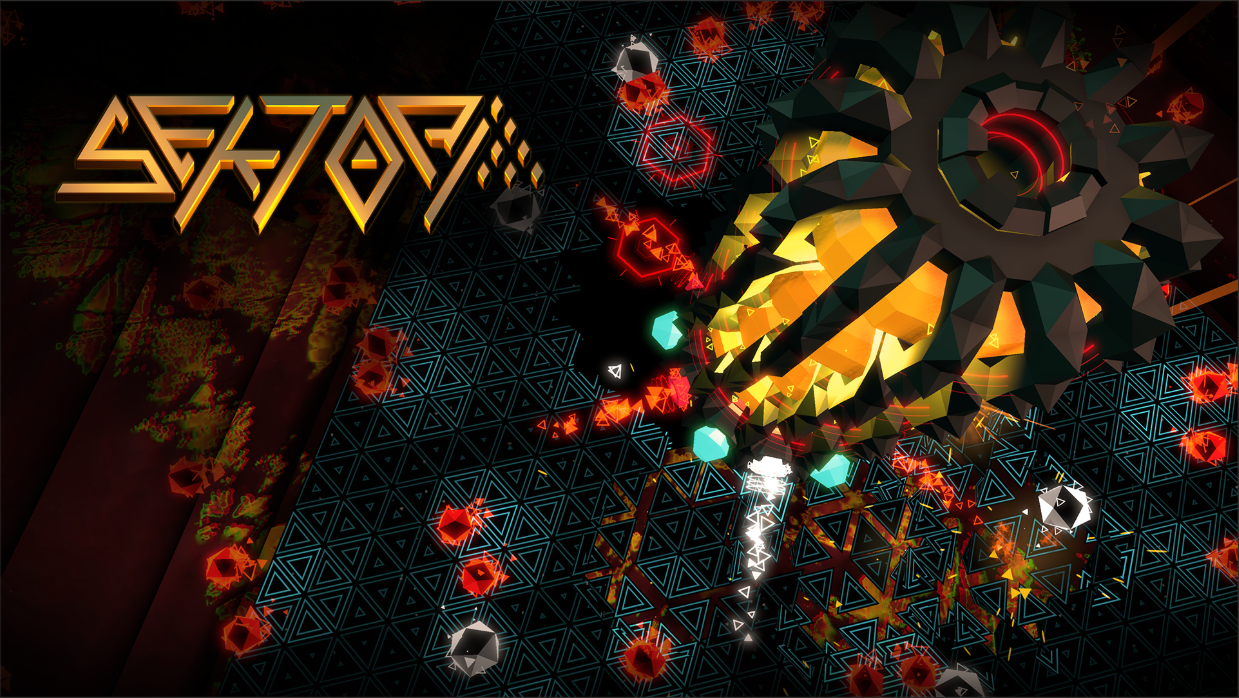
Sektori is one of the best twin-stick shooters made in the last decade, and the Nintendo Switch 2 port arrives in exactly the form it deserves: crisp, portable, and perfectly calibrated for the kind of 20-minute focused session that handheld play enables. Solo developer Kimmo Lahtinen launched the game quietly on PC last November and watched it accumulate Overwhelmingly Positive reviews and a 93 on Metacritic; the Switch 2 release on May 14th has introduced it to an entirely new audience and the consensus is the same across every platform. This is a game that knows precisely what it wants to be and executes that vision without a wasted feature or a padded minute.
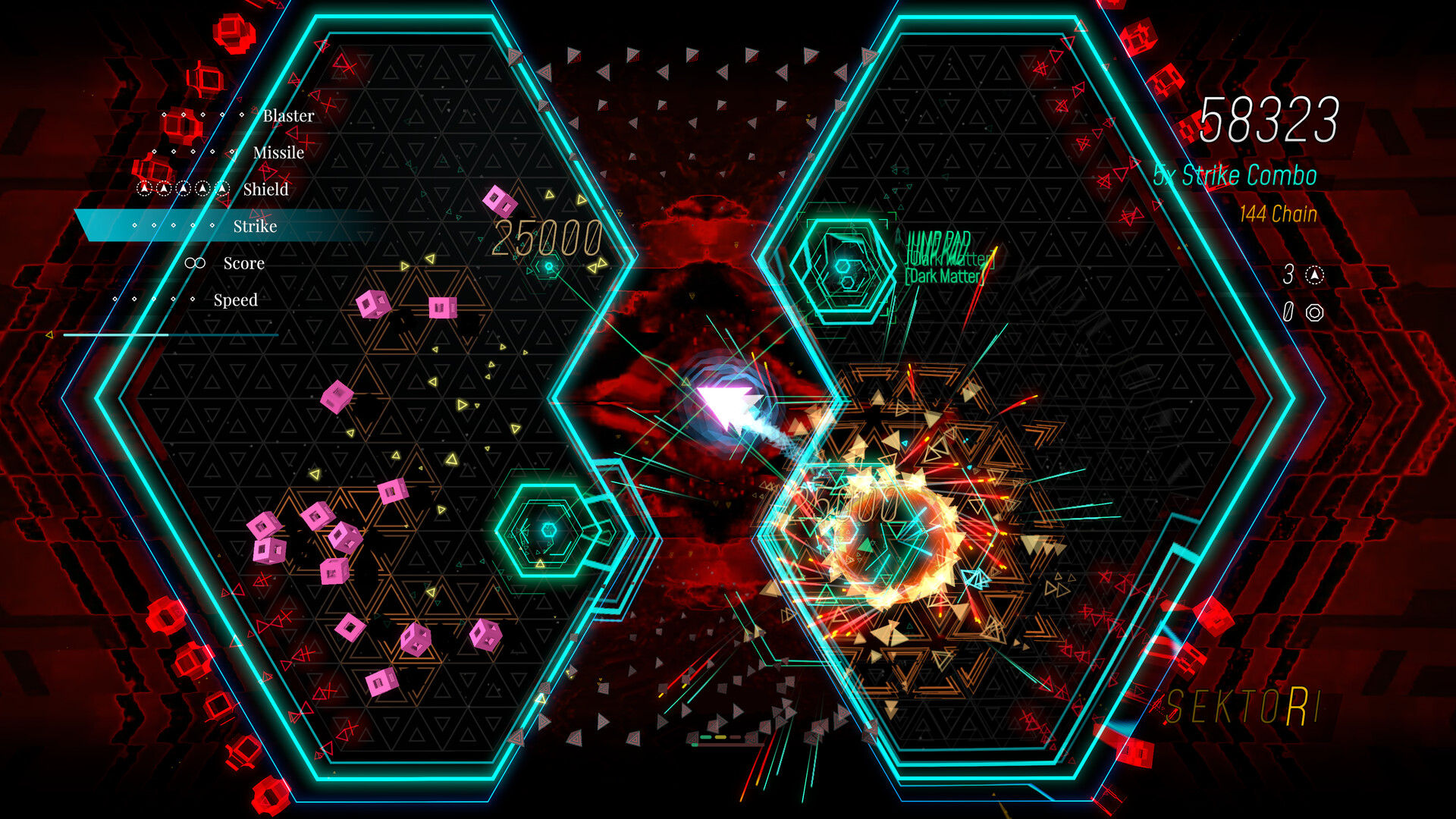
The Geometry Wars comparisons are everywhere and they are accurate — but Sektori is not simply a Geometry Wars clone. It takes the visual language and the twin-stick arena foundation and adds a run-configuration layer (configurable upgrade decks before each run), a dynamic battlefield (the arena geometry morphs and shifts every 15 seconds, forcing constant repositioning), and a Strike system — a dash attack that detonates swarms and chains into score multipliers — that fundamentally changes the moment-to-moment decision-making from pure evasion into something more aggressive and tactical. These are not small additions.
Sektori — The Gameplay Loop
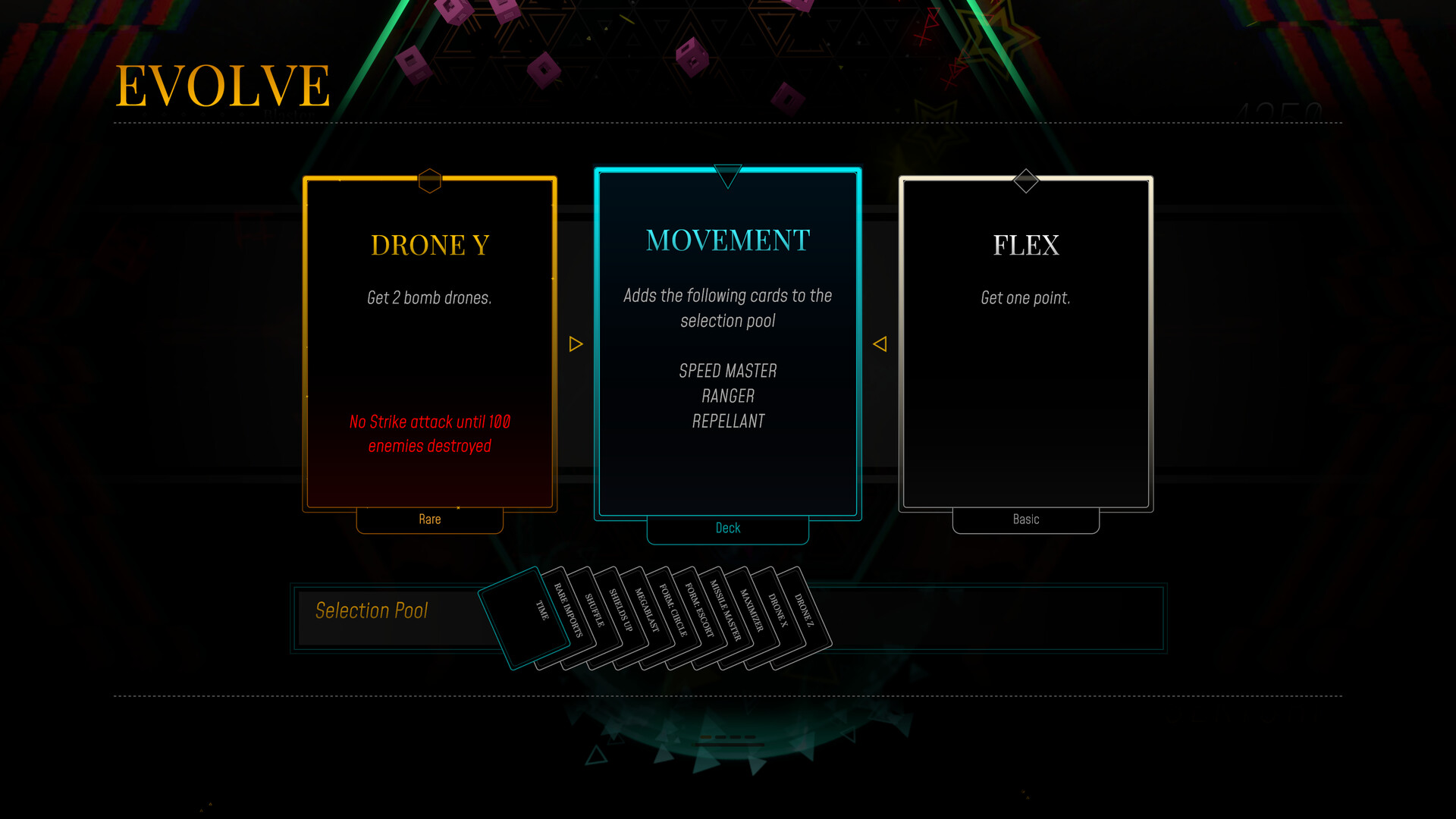
Before each run, you select a ship and configure a deck of upgrade cards — the specific combination shaping how your build develops as you collect power pickups mid-run. Speed, shields, missiles, blaster upgrades all stack and interact, and the optimal deck for the Campaign mode differs from the one that serves Classic or Assault. This pre-run configuration creates genuine strategic depth that most arcade shooters skip entirely, and it’s the primary reason Sektori has the replayability it does.
The core campaign spans five worlds with dynamically changing levels and evolving bosses. “Dynamically changing” is doing real work here — the battlefield reshaping underneath you while you’re managing enemy waves and tracking incoming fire is the game’s signature pressure. It removes the possibility of pattern memorisation and replaces it with pattern recognition and rapid adaptation. Combined with the Strike dash mechanic, which requires you to actively hunt clusters of enemies rather than just survive them, Sektori produces the specific kind of flow state that only the best arcade games achieve: the one where you forget you’re thinking about it.
The Soundtrack and Audiovisual Design
The techno soundtrack is not decoration — it’s structural. The visual design, the enemy patterns, the pulsing neon geometry of the arena, and the music all operate in the same register, and the result is an audiovisual experience that legitimately intensifies the gameplay rather than just accompanying it. This is the kind of design that gets described as “transporting you into another state of consciousness” in the press materials and actually earns the description. At its best, Sektori is genuinely hypnotic.
On the Switch 2 specifically, the visuals translate beautifully both docked and handheld. The colorful, high-contrast neon aesthetic holds up on the Switch 2 screen, and the arcade-score-chasing nature of the game makes 20-minute portable sessions feel natural rather than truncated. It is, as multiple reviewers have noted, one of the best arguments yet for the Switch 2 as the correct home for this type of game.
Difficulty and Content
Three difficulty modes are available — including a Revolution campaign mode for players who want the game at its absolute hardest — and the difficulty curve is steep enough that even the standard campaign provides a genuine challenge. The completionist path (all medals, all challenges) is estimated at around 50 hours, with the main story coming in at 8 and the extras at 35. For $14.99, this is an exceptional value proposition regardless of which corner of that range you end up in.
Six alternate modes — Classic, Gates, Assault, and three others — extend the replayability further and change the gameplay context enough to stay meaningfully distinct. Online leaderboards tie the score-chasing together into a competitive layer that gives the arcade modes an ongoing reason to return. Kimmo Lahtinen, a former Housemarque developer (the studio behind Returnal), has built something that would cost two to three times as much from a larger studio — and likely wouldn’t be as focused.

The Good, The Bad, & The Ugly
| The Good | The Bad | The Ugly |
|---|---|---|
| The Flow State It CreatesWhen the Strike system, the morphing arena, and the soundtrack synchronise, Sektori delivers an arcade high that almost nothing else in the genre currently matches. | Brutally Unforgiving at FirstThe learning curve is steep even on standard difficulty. New players need patience before the mechanics click — and some won’t give it that time. | The Morphing ArenaThe battlefield geometry shifting under you is the game’s signature — and the first few times it happens while a boss is mid-pattern, it’s genuinely disorienting in a way that feels slightly unfair before it clicks as intentional. |
| $14.99 for 50 Hours of ContentEight hours to complete the main campaign. Thirty-five with extras. Fifty for full completion. At this price point, the value is absurd. | Solo Content OnlyNo multiplayer of any kind. For a game this fun and with this much score-chasing energy, a co-op or competitive mode would have been natural. | |
| Housemarque DNALahtinen’s background at the studio behind Returnal is visible throughout — the tactile shooting, the audio feedback, the satisfying enemy deaths. Solo development at Housemarque-adjacent quality is genuinely remarkable. |
The Verdict
Sektori is a relentless twin-stick shooter that perfectly fuses breakneck gameplay with pulsating techno, creating an intoxicating audiovisual experience worth your money. At $14.99 it’s one of the easiest purchases in the Switch 2 library, and one of those rare arcade games that can genuinely absorb hours without feeling like it’s demanding them. If you own a Switch 2 and like this genre at all, there is no reason not to have this game.
For more Switch 2 and arcade game coverage, check out our full reviews section.