
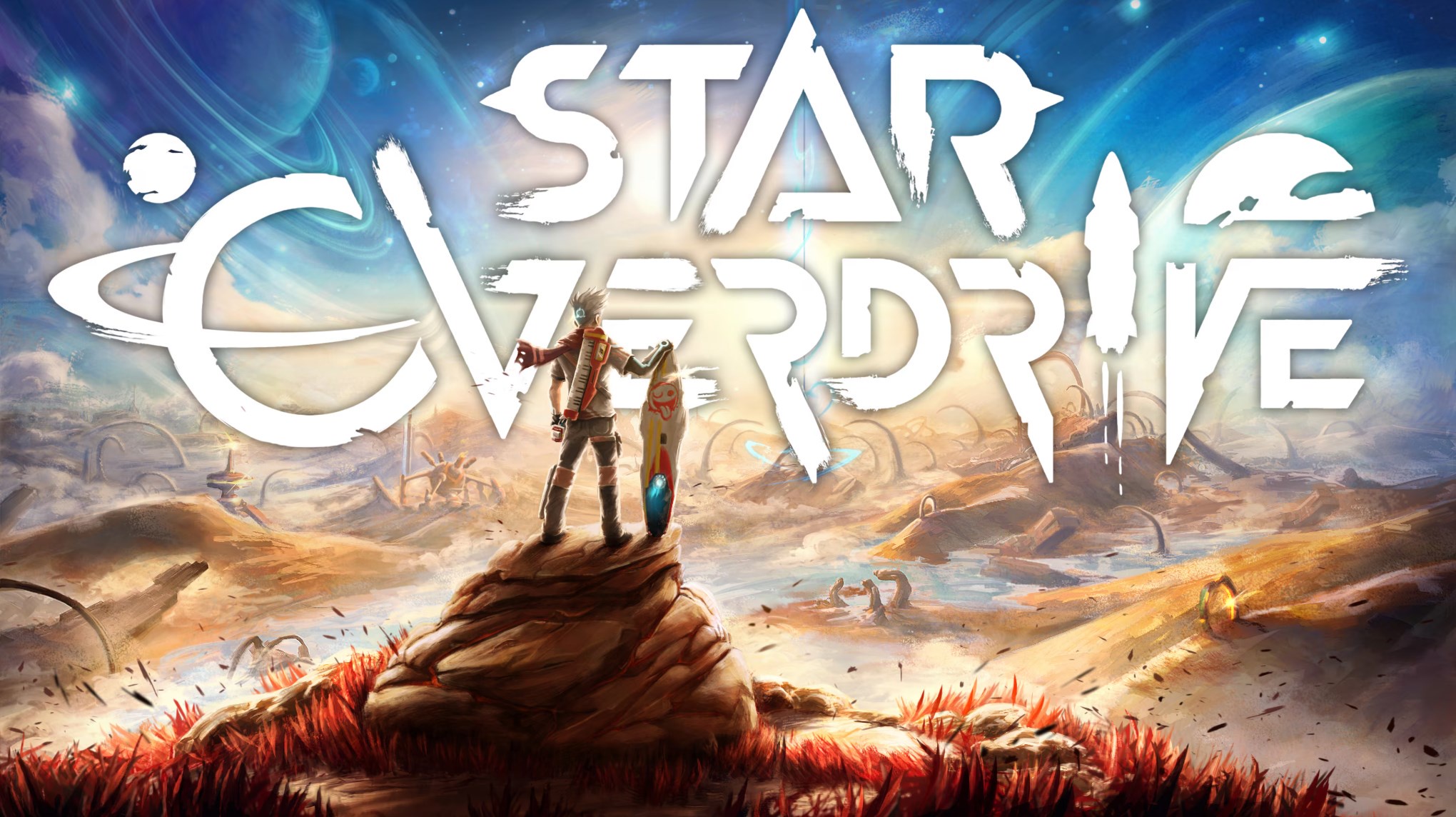
If you’re craving a breakneck, visually kinetic action-adventure experience where your traversal skills are just as important as your combat chops, then Star Overdrive might be exactly the game you’ve been looking for. Developed by indie studio Caracal Games and published by Dear Villagers, Star Overdrive hits the ground running with a Hoverboard strapped to your feet, a synth-blasting Keytar on your back, and a world begging to be discovered.
You Are Bios, and This World is Broken
The game begins with a cryptic message and a crash landing. You play as Bios, a mysterious protagonist who finds themselves stranded on the alien world of Cebete after chasing a distress signal. Your only clues are the absence of your partner, Nous, and a strange, living environment packed with ancient ruins, scattered technology, and threats both biological and mechanical.
The narrative is simple but emotionally driven. Much of the story is discovered through exploration, memories, and environmental storytelling. Rather than leaning on cinematic cutscenes, the game lets players absorb its mysteries at their own pace, which fits the overall design philosophy: choose your speed, pick your direction, and make the story yours.
A Hoverboard Worth Mastering
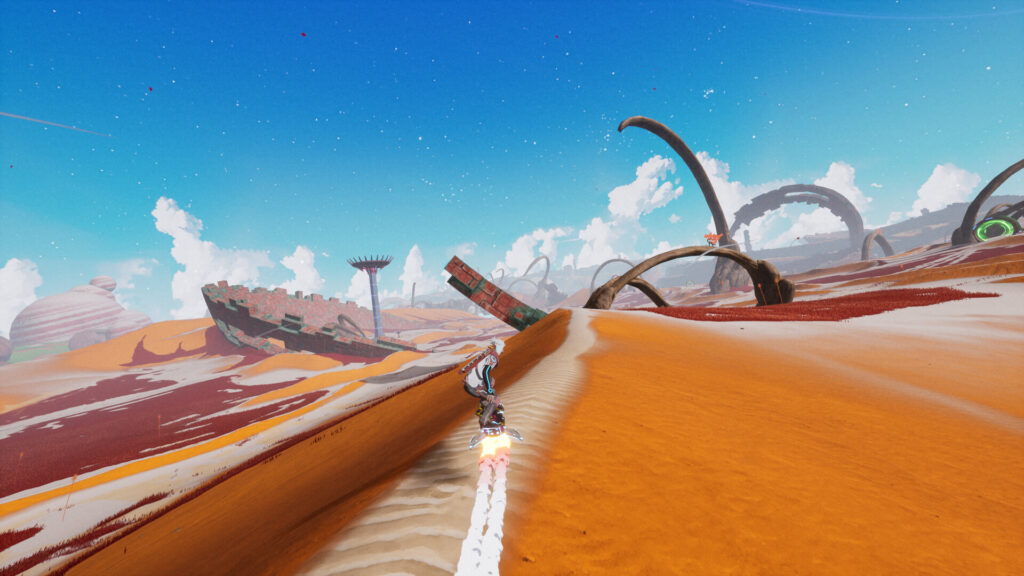
Traversal in Star Overdrive is the star of the show. The Hoverboard isn’t just your vehicle—it’s your lifeline. You’ll be zooming, grinding, flipping, and tricking through deserts, ruins, and mountains, combining parkour-like creativity with a Tony Hawk-style sense of flow.
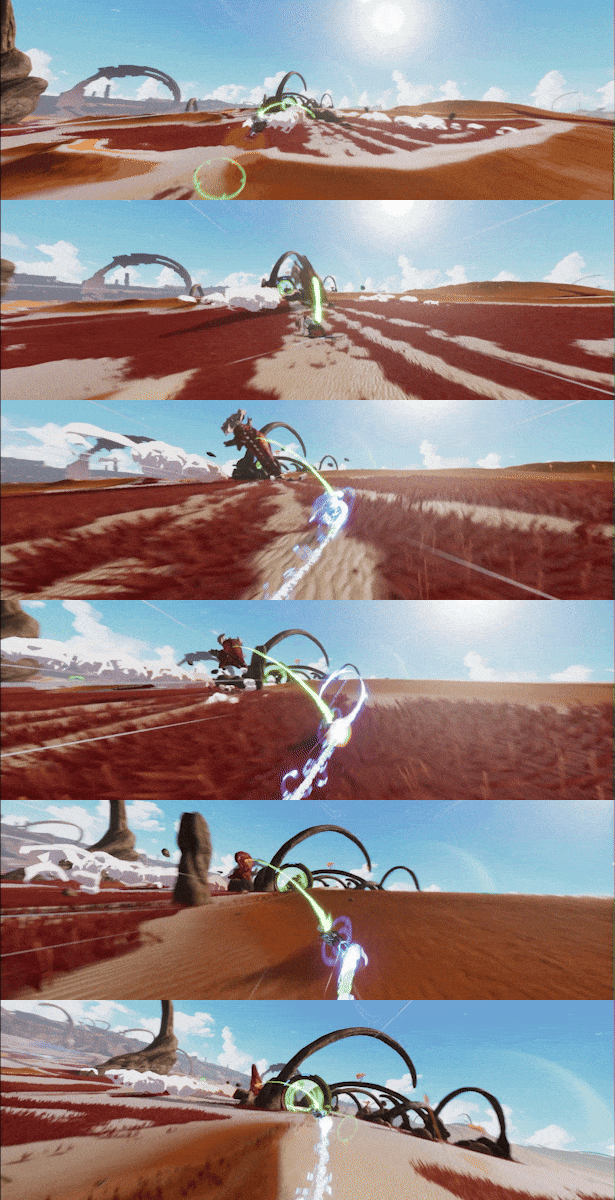
And it feels good. Momentum matters. Speed creates access. Tricks aren’t just for flair—they allow you to chain into combat more effectively, access hidden areas, or refill ability energy. Once you get in the groove, Cebete turns into a playground of ramps, ledges, half-pipes, and gravity-defying opportunities.
Customization adds depth. You’ll upgrade your Hoverboard’s speed, gravity resistance, control, and design. The more you improve it, the more exhilarating—and manageable—the world becomes.
Combat With a Keytar?
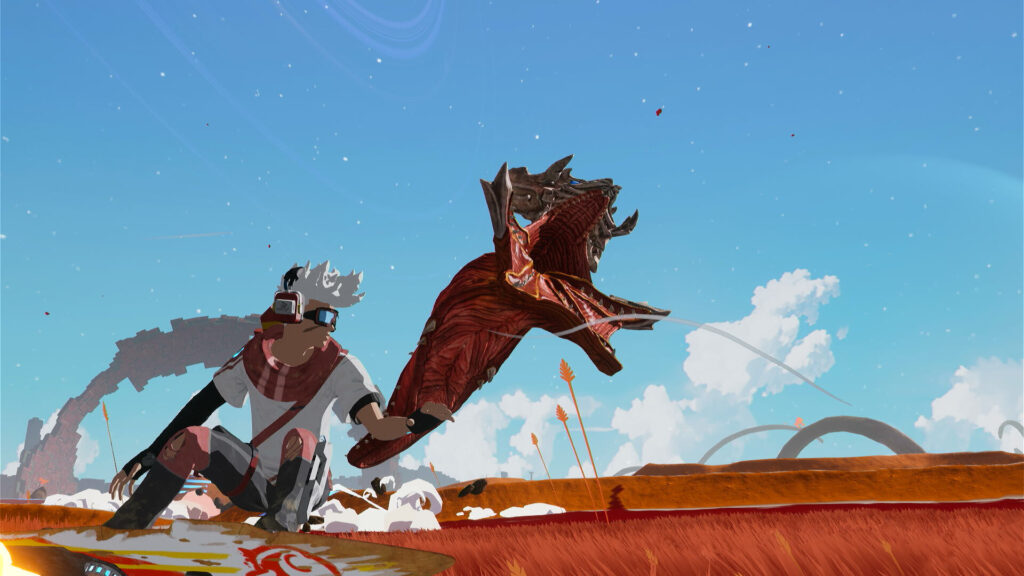
Yes, and it works better than you’d expect. The Keytar isn’t just a funky accessory; it’s your main tool for both combat and puzzle-solving. In battle, it lets you unleash energy attacks and kinetic bursts that tie into your movement abilities. In exploration, the Keytar interacts with environmental puzzles, ruins, and ancient tech, creating a satisfying rhythm between action and thought.
Combat leans on agility. Rather than brute force, success often comes from clever movement, combining Hoverboard maneuvers with power usage to stay mobile and smart. You’re not a tank—you’re a trickster with an electric instrument.
The World of Cebete: Three Biomes, Infinite Style
Star Overdrive isn’t an open-world in the bloated Ubisoft sense—it’s focused, vibrant, and segmented into three unique biomes, each with its own visual identity, hazards, and traversal puzzles. The game avoids monotony by making no two rides feel the same.
Whether you’re carving sand dunes in the whispering desert, launching over gravity-defying ruins, or dodging environmental hazards in dense neon jungles, Cebete constantly evolves around you. These environments aren’t just backdrops—they push your skills.
Secrets are everywhere. Optional ruins, trick challenges, hidden memory echoes, and upgrade caches reward players who don’t just race to the end but explore every corner.
Puzzles That Don’t Kill the Momentum
One of the biggest challenges in movement-driven games is designing puzzles that don’t stop the fun. Star Overdrive succeeds by integrating puzzles into traversal. Most challenges involve manipulating gravity, chaining abilities, or planning trick routes to unlock the next path.
Instead of pulling you out of the flow, puzzles build into it. They’re not obtuse logic walls, but clever little rhythm breaks that reward observation and experimentation.
Presentation That Pops
Visually, the game is stunning. It leans into a stylized, cartoony sci-fi aesthetic with vibrant color palettes and clean animation work. The motion blur and particle effects during high-speed tricks or battles create an energizing visual feedback loop. It doesn’t aim for photorealism—it aims for style, and it nails it.
The soundtrack, packed with electronic and synthwave bangers, deserves its own paragraph. Every trick, dash, and battle feels juiced with energy thanks to the reactive music system. Your moves feel like they’re part of the score, and your Keytar literally plays into the world.
What’s Great
- Hoverboard traversal is buttery smooth and deeply rewarding
- Biomes are compact but creatively designed
- Combat balances movement, powers, and style in satisfying ways
- Puzzles support momentum, not halt it
- Visual and audio design blend into the gameplay seamlessly
What Needs Work
- Camera sometimes struggles at tight angles during complex tricks
- Hoverboard handling takes real time to master—may frustrate casual players
- The story, while emotional, is subtle—some players may want more structure or dialogue
Should You Play It?
Yes. If you liked Solar Ash, Jet Set Radio, or Tony Hawk’s Pro Skater but wished they had more emotional weight or meaningful puzzles, this is your game. It’s for players who value kinetic gameplay, expressive movement, and exploration over stats and menus.
Should You Buy It?
If you’re into traversal-based adventures and don’t mind a bit of a learning curve with hoverboard mechanics, Star Overdrive is a no-brainer. It offers something rare: a movement system that doesn’t just feel like a gimmick—it feels like the soul of the game.
It’s also a huge accomplishment from a 10-person team. The love, care, and creativity shows. For the price of a mid-tier indie, you’re getting a tightly packed thrill ride that respects your time and rewards your curiosity.
Star Overdrive: Star Overdrive is a bold love letter to fast-paced adventure games. It mixes hoverboard tricking, keytar-powered combat, and rich environmental design into a compact, replayable package. There’s nothing else quite like it this year. – Obsidian