
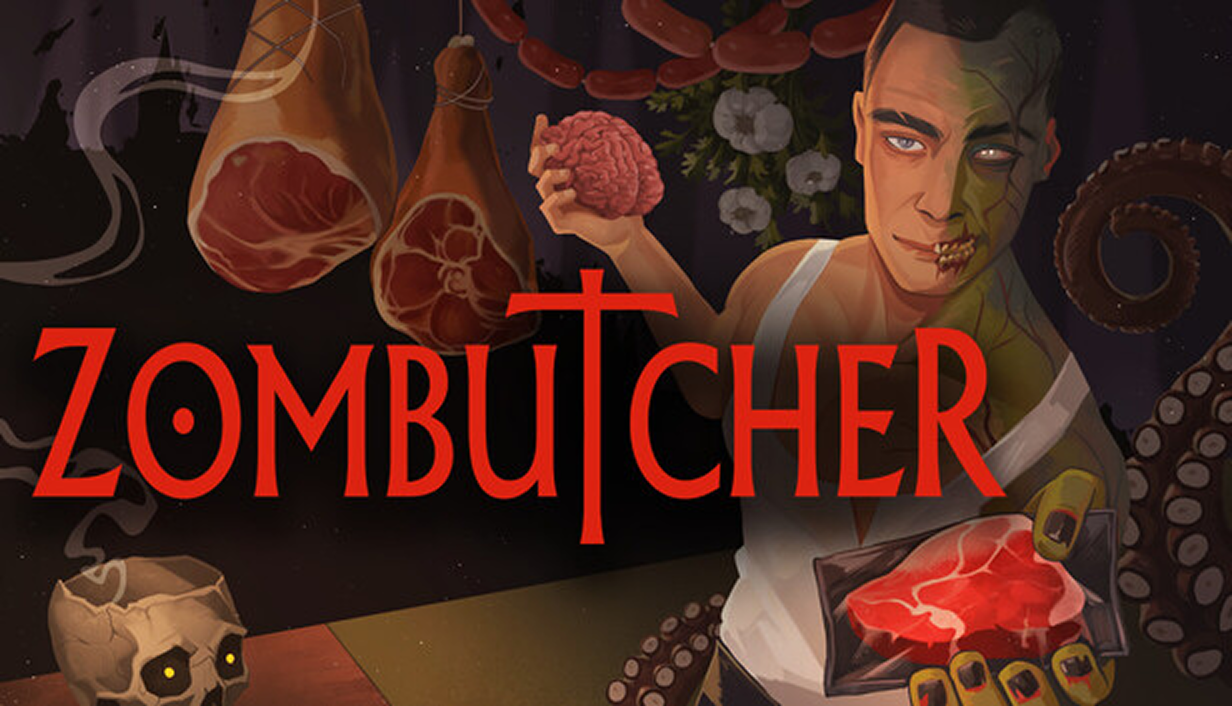
ZOMBUTCHER: Monster Business Simulator has one of the most genuinely funny premises in recent indie memory: you are a zombie running a legitimate meat shop in Louisiana, selling cuts to human customers by day, and then hunting those same humans by night to replenish your inventory. You manage a business. You manage a double life. You manage your hunger bar, your stealth approach, your shop upgrades, and your relationships with a monster community that depends on your operation. It is — on paper — a brilliant mashup of Schedule I’s illicit business loop and zombie horror atmosphere.
That it lands as a Mixed review game at launch rather than a clear recommendation is not because the concept fails. It’s because the execution is uneven in ways that feel fixable, and the game at this moment has roughly six hours of content, several balance issues that directly undermine its core tension, and bugs that affect progression meaningfully enough to push some players away. What’s here is genuinely fun when it works. It just doesn’t always work yet.
The Core Loop — When It Clicks
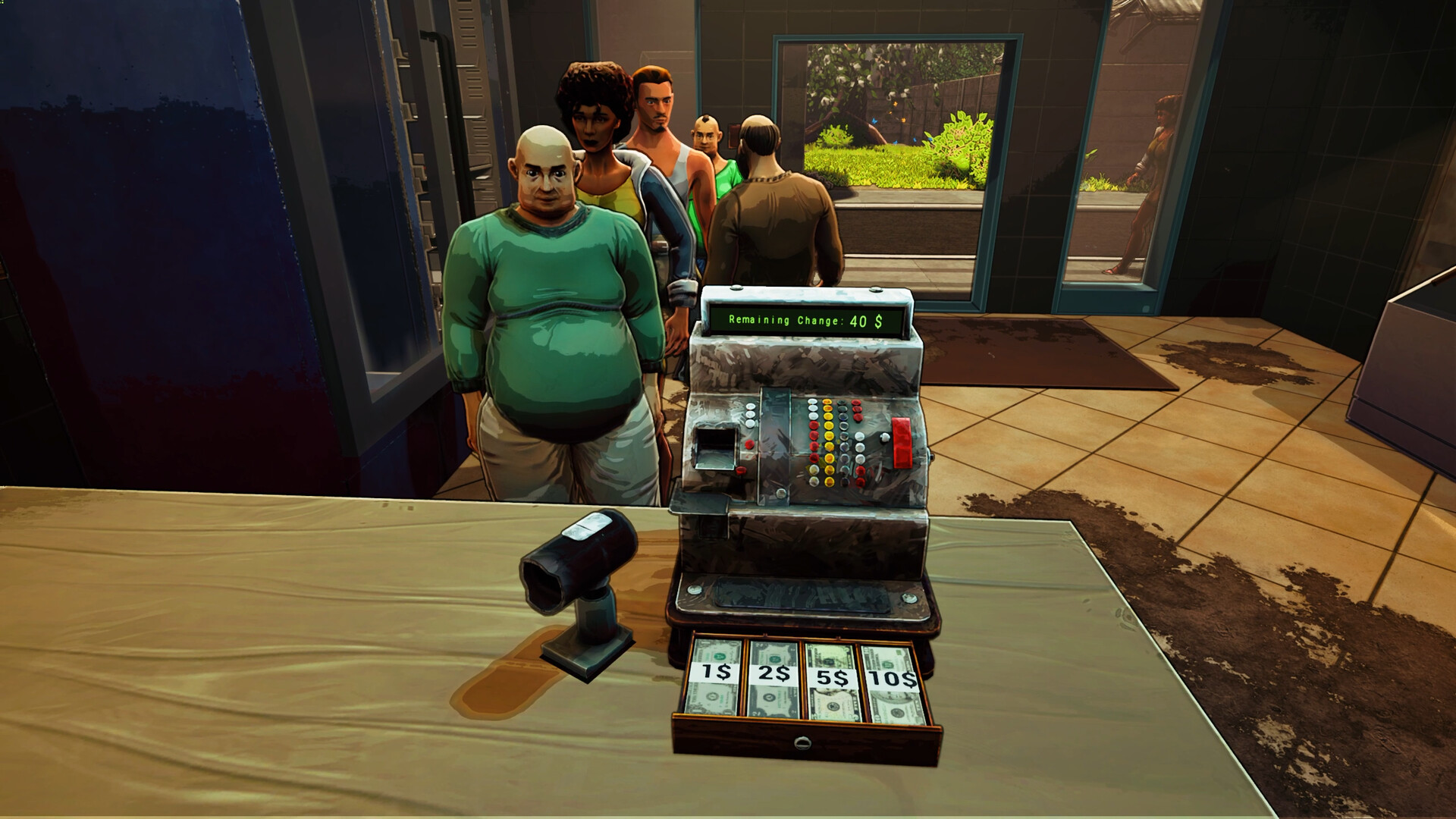
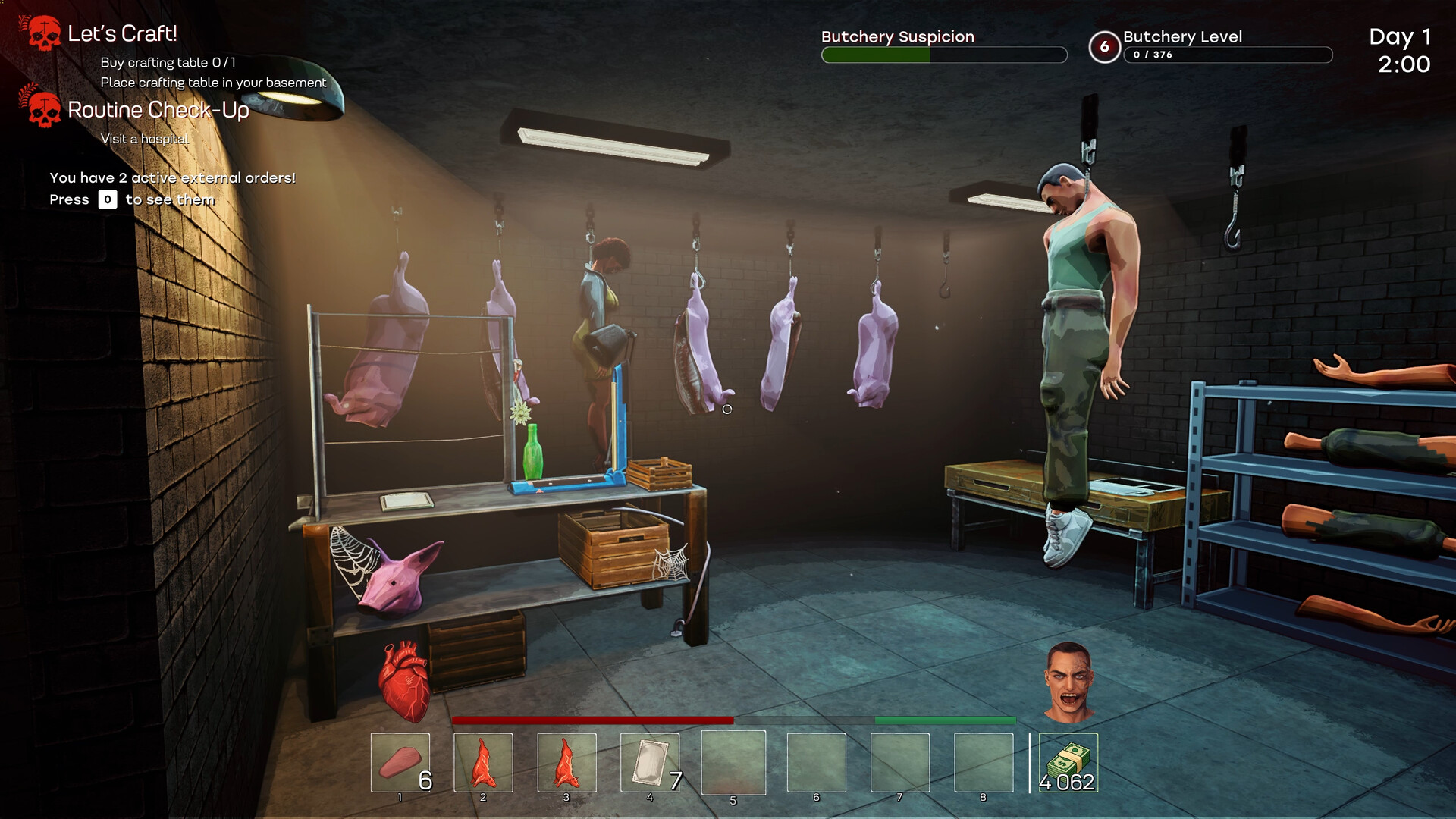
The fundamental design is satisfying in a way that few games achieve: craft meat, sell meat, kill people, sell people, upgrade your store, repeat. Day mode has you running a functioning butcher shop — cutting meat, packing it, serving customers, handling deliveries, keeping the floor clean. Night mode sends you into the Louisiana streets with stealth, shadows, and a hunger bar to hunt new inventory. The parallel management of legitimate commerce and dark harvesting creates a genuine friction that keeps both halves interesting, and the creepy atmosphere — good music, solid sound design, appropriate Louisiana fog — gives the whole thing a personality above its price point.
The Schedule I comparison that players are making is earned. ZOMBUTCHER draws from the same genre DNA of running an illicit operation while maintaining a legitimate front, managing resource chains, and upgrading your infrastructure. The zombie twist adds a stealth layer that Schedule I doesn’t have, and the first-person perspective puts you directly in the grime of both sides of the operation in a way that works tonally.
The Balance Problems
The most consistent complaint across the player base concerns balance, and the issues are specific enough to point clearly at what needs fixing. The hunger bar depletes faster than the night cycle gives you time to address it, creating an aggressive difficulty wall that doesn’t feel intentional so much as untuned. The ratio of police to civilians in the town is heavily skewed toward cops, which compresses the space in which stealth hunting operates and makes the night loop stressful in a frustrating rather than tense way. Adding to this, cops cannot be harvested — which makes logical sense thematically but creates a further resource bottleneck when cop density is already high.
The save system has a documented bug where saving at one in-game time will reload you at an earlier point, effectively undoing progress. This is the kind of issue that breaks immersion badly in a game built around session-to-session progression, and it’s the most commonly flagged problem among players who otherwise enjoyed the game. ODIUS has been actively patching — a major patch landed the day after release and another followed the next day — which is a good sign for the game’s trajectory, but the save bug in particular needs a fix before the game can be confidently recommended to everyone.
Content Depth and Who This Is For Right Now
The honest assessment of ZOMBUTCHER at launch is that it has about six hours of content, an addictive loop that benefits significantly from understanding how it works, and an active developer who is clearly responding to player feedback in real time. For players who are comfortable with indie games at this stage of development — and who want in on the ground floor of something genuinely creative — the $9.09 introductory price is reasonable for what’s here. For players who want a polished, complete experience, the advice to wishlist and revisit in six months is the more honest recommendation.
The concept deserves a fuller game. The Louisiana atmosphere is effective, the dark humour lands, and the double-life management loop is the kind of thing that could sustain 30+ hours of content with the right expansion. ODIUS is apparently working toward that — but it isn’t there yet.

The Good, The Bad, & The Ugly
| The Good | The Bad | The Ugly |
|---|---|---|
| The Concept Is Genuinely BrilliantZombie butcher shop by day, human hunter by night, monster community supplier always. The premise is creative enough to carry the game’s rough edges further than most indie concepts would. | Balance Needs WorkHunger bar too fast, cop density too high, no option to harvest cops despite civilians respawning. The night loop feels punishing rather than tense as a result — and it’s the game’s most interesting half. | Save System BugSaving at one time and reloading at an earlier point is the most serious launch issue. In a progression-based sim, losing game time to a broken save undoes the core satisfaction of the loop. |
| Atmosphere and AudioGood music, creepy sound design, effective Louisiana fog. ZOMBUTCHER has more personality than most games at this price point and the tone is consistent throughout. | ~6 Hours of ContentShort for the genre. The loop is addictive enough that players want more — and there isn’t more yet. Story quests are thin, and the end comes sooner than it should. | Body Part Physics BugsHarvested body parts launching across the map is funny exactly once. It’s a physics bug that undermines the resource management loop by making collection unpredictable. |
| Active DeveloperTwo significant patches in the first two days post-launch. ODIUS is clearly listening and responding. The trajectory is positive for players willing to grow with the game. |
The Verdict
Sink your teeth into a gory business in this twisted indie gem. Juggling human flesh and profit is oddly satisfying. A unique blend of dark humor and resource management. ZOMBUTCHER is a game with a great concept, a working core loop, and a developer actively fixing its launch issues — but it’s also a game with a broken save system, balance problems that undermine its most interesting half, and about six hours of content in a genre that rewards 20+. If you’re the kind of player who enjoys getting in early on something with genuine creative DNA and watching it develop, the introductory price makes that bet easy. Everyone else should bookmark it and come back in six months.
For more game reviews, check out our full reviews section.
Score Breakdown