
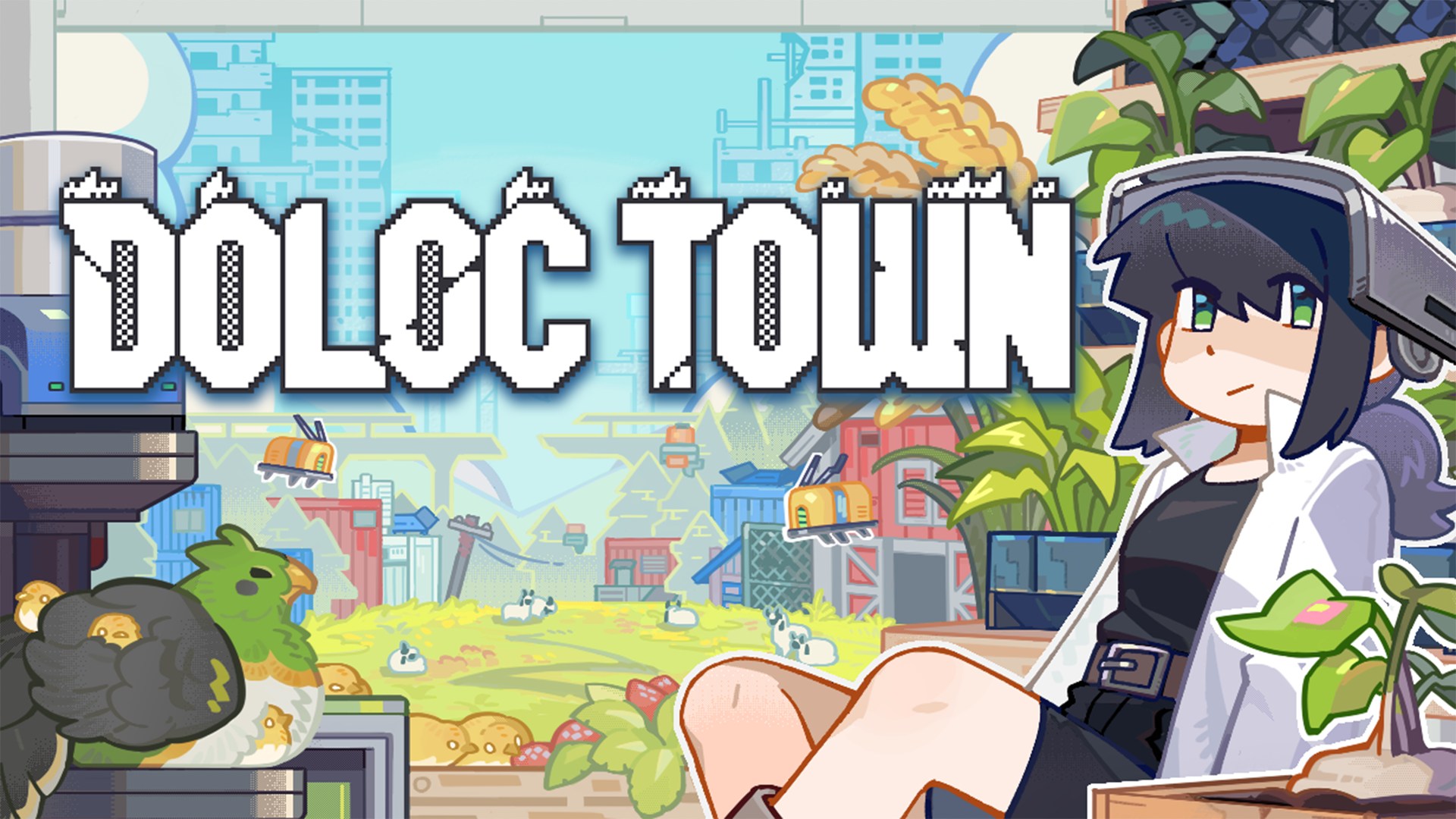
Doloc Town is a side-scrolling pixel-art farming sim set after the end of the world, and it is far more ambitious than that description makes it sound. You start as a young scavenger fleeing enemies, stumble into a small settlement, and build a farm upward — platform by platform — while the weather actively tries to kill everything you plant.
The comparison everyone reaches for is Stardew Valley, and it’s fair as a starting point. But this is one of the very few farming sims that meaningfully departs from that formula rather than politely reskinning it. As one of our reviewers put it: if Stardew had a bit of Terraria’s platforming and combat, you’d land somewhere near here.
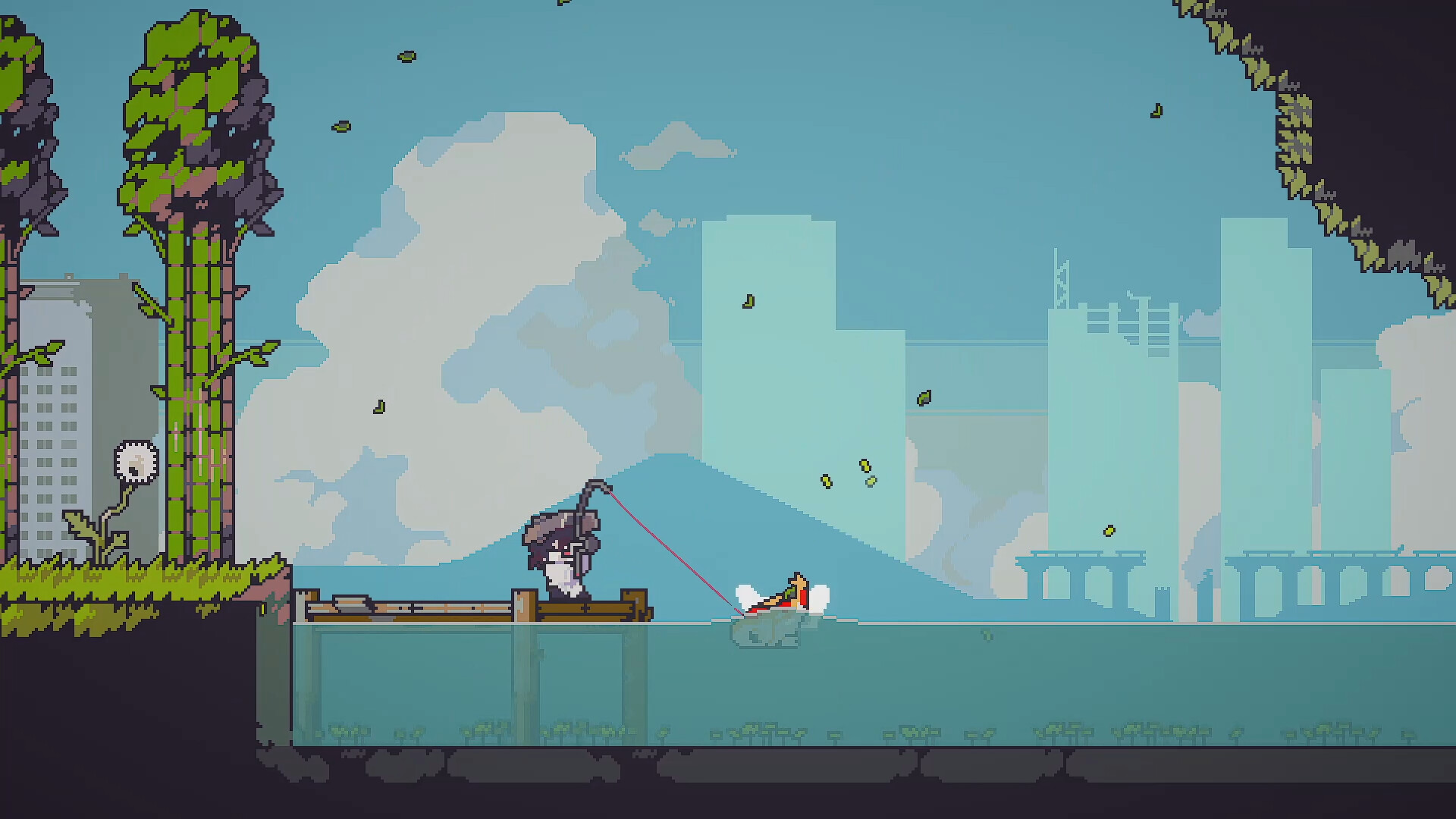
The Loop
Over 40 kinds of minerals, plants and scrap shaped by the apocalypse. Out here, even junk has a purpose — and yes, you can become a full-time trash goblin.
Stack platforms and containers across your farm, building vertically. The progression from a tiny tent to an industrial drone hub is genuinely satisfying.
River Valley, Wetlands, caves and the Old City Ruins — each with unique resources, enemies and stories, unlocked as you restore the environment.
Solar and wind power, drone stations, and end-to-end automated seeding, tending and harvesting. Retire from farming while still farming.
The Weather Is the Best Idea Here
That’s the design idea that lifts Doloc Town above its peers. Most farming sims treat weather as random friction you endure. Here it’s simultaneously a threat, a power source, and a long-term progression track — and turning the climate itself into something you fix gives the whole game a narrative arc that “grow crops, get rich” simply doesn’t have.
The post-apocalyptic setting earns its keep in the same way. Several of our reviewers noted the tonal balance: genuine desolation and existential weight underneath, real warmth and optimism on top. It’s cosy without being weightless.
Genuinely Deep Systems
The gene and fish breeding systems are the ones that surprised people most. They’re the sort of late-game depth that most cosy games gesture at and don’t deliver, and they give the back half of the game something to actually chew on once the farm is running itself.
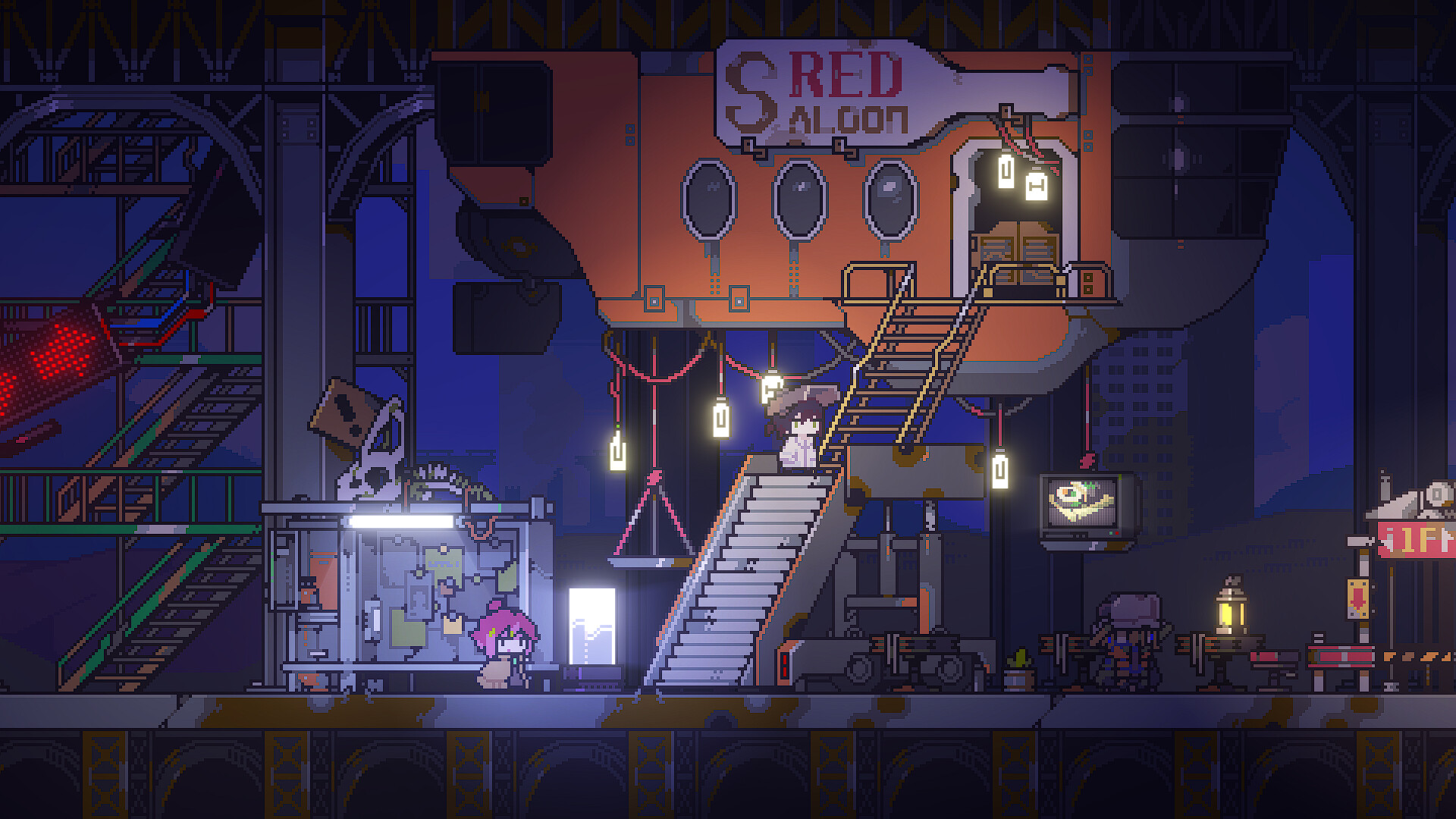
Exploration holds up too. The map is large and stuffed with hidden caches — permanent health and energy upgrades tucked behind movement abilities, tapes to find for a cassette player a friend gives you, and secrets layered under the town’s lighthearted daily life. There’s always something to do, and pointedly no pressure to do it.
Where It Falls Short
The NPC criticism is the one we’d weight most heavily. In a genre where relationships are usually a core pillar, characters who stop having anything new to say once you’ve befriended them is a real gap — the townsfolk are charming and individual, but they’re thinner than the farming systems around them.
The translation issue is worth knowing about but shouldn’t put you off. It’s rough edges rather than incomprehensibility, and it never obscures what you’re meant to do.
It Has the Awards to Back It Up
Backed up by a 79 on Metacritic and an Overwhelmingly Positive rating from English-language Steam reviewers. This isn’t a hidden gem so much as a game that’s already been found and is quietly doing very well.

The Good, The Bad, & The Ugly
| The Good | The Bad | The Ugly |
|---|---|---|
| Weather as a Whole SystemAcid rain, heat and storms threaten your crops — but lightning powers your farm and rain irrigates your fields, and restoring the environment drives the extremes back entirely. Threat, resource and progression track in one. Genuinely the smartest thing here. | Translation Rough EdgesOriginally Chinese, and the English is serviceable but carries mistakes and unnatural phrasing throughout. Never confusing enough to block progress, but consistently noticeable. | NPCs Stop TalkingHit maximum friendship and there’s nothing new to say. Complete the main questline and the town barely reacts. In a genre built on relationships, that’s the most significant gap — the characters are charming but thinner than everything around them. |
| Real Systemic DepthCrop gene modification across 30+ plants, fish breeding toward specific offspring, seed research, drone combat with modular loadouts, and Celeste-adjacent movement tech. Late-game depth most cosy games only gesture at. | Rough Opening HoursThe early economy is slow, the quest list is immediately overwhelming, and the controls and systems take real time to click. Several players needed a while before it hooked them — but it does hook them. | Map and Save QoLNo way to annotate the map or track quest locations, which genuinely hurts in a game with this much exploration. And saving requires exiting to the main menu rather than doing it in place. |
| Vertical Building and ValueStacking platforms upward from a tiny tent to a drone-automated industrial hub gives progression a physical shape. And 30+ core hours with 100+ more available at $19.99 is an unusually generous package. | Automation Isn’t Robust EnoughThe endgame promise of letting drones handle everything doesn’t fully deliver — several players wanted the automation systems to go further than they currently do. | Combat Takes AdjustingDrone-based combat is the system players struggled with most initially. It’s not the game’s focus and it clicks eventually, but it’s the least intuitive thing on offer. |
The Verdict
Dive into this charming post-apocalyptic farming sim for a cozy pixelated adventure. Unearth secrets, grow crops, and build your oasis amidst the ruins. Doloc Town is one of the genuinely few farming sims willing to take real risks with the formula — and, more importantly, to execute on them.
The vertical building gives progression a physical shape you can see. The weather system turns climate into threat, resource and long-term goal simultaneously. The gene and breeding systems provide late-game depth the genre rarely bothers with. And underneath the cosiness there’s an actual world with actual history — the “Eden” branding on the pre-apocalypse tech, the vanished town leader, the question of why the river valley still thrives.
The flaws are real but mostly peripheral. Translation roughness, a slow and slightly overwhelming opening, and QoL gaps around the map and save system. The one that genuinely matters is the NPCs — in a genre where townsfolk relationships are usually a pillar, having them go quiet once befriended leaves something missing.
The honest read: if you like farming sims at all, play this. If you’ve put hundreds of hours into Stardew and want something that scratches the same itch without being the same game, this is the strongest option we’ve seen in a while — and at $19.99 for 30+ hours of core content, the value case doesn’t need arguing.
Give it three or four hours before you judge it. Nearly everyone who loves this game reports bouncing off the controls and systems initially, then getting completely absorbed. That pattern is consistent enough to be worth planning for.
A small studio took a real swing here, and it landed. That’s worth supporting.
For more game reviews, check out our full reviews section.