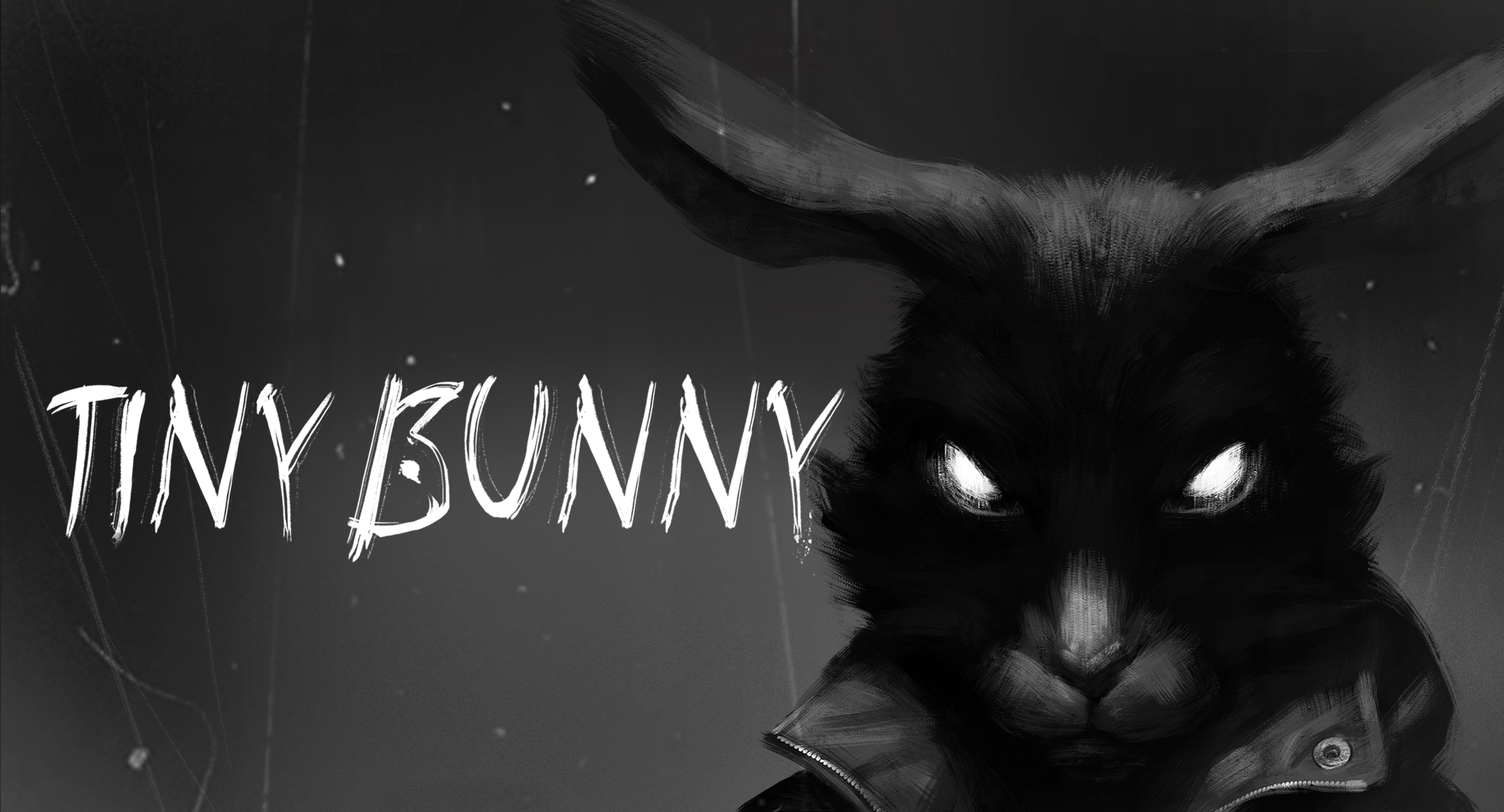
There is a specific kind of horror that only winter can produce. It isn’t just about the cold; it’s about the isolation, the way sound travels differently through snow-laden trees, and the oppressive feeling that something is watching you from the white void. Tiny Bunny, a non-linear visual novel set in a remote Siberian village, captures this atmosphere perfectly. For years, it has been the darling of the indie horror scene—a black-and-white nightmare fueled by childhood fears and post-Soviet gloom.
However, the long-awaited release of Episode 5 has fractured the community. What was once a universally praised masterpiece now sits with a “Mixed” rating on Steam. Is Tiny Bunny a victim of its own hype, or did the developers lose their way in the woods?

Welcome to the Forest
The premise of Tiny Bunny is deceptively simple. You play as Anton, a sixth-grader who has recently moved to a quiet, unremarkable village lost among the Siberian forest. But this is no winter wonderland. Children are going missing. Police are helpless. And Anton begins to see things—shadowy figures, animals that walk like men, and a fox girl named Alice who beckons him into the thicket.
The game excels at “false coziness”. You spend your days navigating the mundane horrors of school bullies and a crumbling family dynamic, only to have the supernatural bleed into your reality at night. The writing in the first four episodes is stellar, building a sense of dread that feels grounded yet Lovecraftian.
A Visual Identity Crisis
For most of the experience, Tiny Bunny is visually stunning. The art style is monochromatic, resembling pencil sketches that feel gritty and raw. It fits the “disturbing, oppressive atmosphere” perfectly.
However, the visual consistency takes a massive hit in the final chapter. Many players have noted that the art style in Episode 5 feels disjointed, with some new sprites clashing with the established aesthetic. There have been accusations that the developers use 3D models or even AI to generate assets, resulting in a look that feels artificial compared to the hand-drawn warmth of earlier chapters.
While some users defend the art team, noting that maintaining consistency over a 2.5-year development cycle with a small team is difficult, the shift is jarring enough to break immersion for many. When a visual novel relies entirely on its static images to tell a story, a drop in quality is not just a nitpick—it’s a narrative failure.

The Episode 5 Controversy: A Narrative Collapse?
The crux of the current backlash lies in the writing of the finale. After four episodes of meticulous buildup, Episode 5 feels to many like a rushed, incoherent fever dream.
Critics argue that the endings feel like “fanfiction,” introducing wild elements like “Evangelion-Kaiju” battles that feel entirely out of place in a story that began as a grounded psychological horror. One reviewer noted that the twist boils down to a trope that has been “eaten to a hole for years,” reducing the complexity of the mystery to a simple genre cliché.
Furthermore, the game boasts 20 endings, but quantity does not equal quality. Players report that a vast majority of these are essentially “You Died” screens or filler endings where the protagonist gets “speedblitzed with just one wrong choice”. The “true” endings that actually resolve the plot and explain the lore are locked behind obscure, specific choices made throughout the entire game, meaning a blind playthrough is likely to result in a confusing, unsatisfying conclusion.
However, not everyone agrees that the finale is a disaster. Some players argue that the dissatisfaction stems from skipping credits (where epilogues are hidden) or failing to see how the puzzle pieces fit together. For those who dig deep, there is a belief that the finale “WORKS” and that every ending covers a different mystery.
Audio and Atmosphere
If there is one thing that remains consistent, it is the sound design. The game features full voice acting widely considered high quality, adding emotional depth to the characters. The original scary soundtrack does a fantastic job of “piercing you to the bones”.
However, even the audio isn’t safe from the finale’s divisiveness. A specific track used in the dramatic moments of the final episode has been described by some as “loathsome” and incessant, ruining the climax’s vibe.
Pros & Cons
| Pros | Cons |
| ✅ Incredible Atmosphere: Episodes 1-4 are a masterclass in horror, blending isolation with supernatural dread. | ❌ Disappointing Finale: Episode 5 feels rushed, incoherent, and tonally disconnected from the rest of the game. |
| ✅ Branching Narrative: With 20 endings, your choices truly matter, encouraging replayability. | ❌ Inconsistent Art: The final chapter suffers from a jarring shift in visual style, with assets that look traced or 3D-modeled. |
| ✅ Top-Tier Audio: Great voice acting and a chilling soundtrack enhance the experience. | ❌ Obscure Progression: Getting a “good” ending requires specific, obscure steps, often leading to unsatisfying “filler” endings for first-time players. |
| ✅ Value: For ~$11, you get a significant amount of content and art. | ❌ Broken Immersion: The shift from psychological horror to “anime-style” action in the end alienates fans of the original tone. |
Tiny Bunny: Tiny Bunny is a tragedy in two parts. The first part—comprising the first four episodes—is a genuine indie gem. It is atmospheric, scary, and beautifully drawn. It deserves every bit of praise it received over its years in Early Access. The second part—the finale—is a cautionary tale of scope creep and lost vision. While there are moments of brilliance hidden within the 20 endings, the inconsistent art and jarring narrative shifts make it a difficult pill to swallow for those who were invested in the grounded horror of the beginning. If you are a fan of visual novels, Tiny Bunny is still worth playing for the journey, not the destination. Treat the first four episodes as the main event, and approach the finale with tempered expectations. – Obsidian