
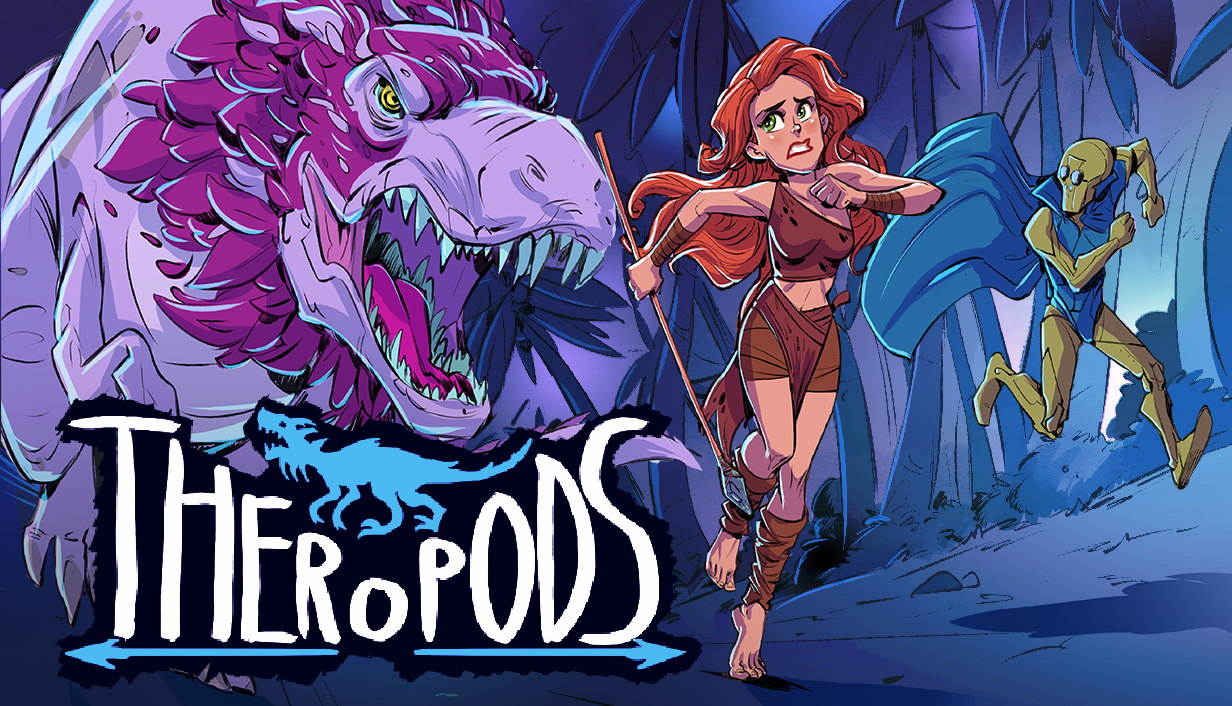
Theropods is a point-and-click adventure set in a prehistoric world of tribal villages, roaming dinosaurs and — eventually — a crash-landed visitor from somewhere considerably more advanced. It’s beautifully drawn, warmly animated, and contains no written language whatsoever.
That last part is the whole trick, and it works far better than it has any right to.
Wordless Storytelling That Actually Lands
Our verdict: Lost Token crafts a genuinely clever adventure that uses wordless storytelling to deliver constant surprises. The absence of text isn’t a gimmick or a localisation shortcut — it’s the design, and the game is built to support it.
What makes it possible is the sheer density of animation. Villagers in the background each do their own thing, close-up cutscenes carry the dramatic weight, and characters emote clearly enough that intent is never in doubt. When you can’t write “he’s suspicious of you,” the animation has to say it — and here it does.
One player mentioned simply enjoying saying hello to everyone in the village, which tells you plenty about how much personality is packed into a cast that never says anything.
The Loop
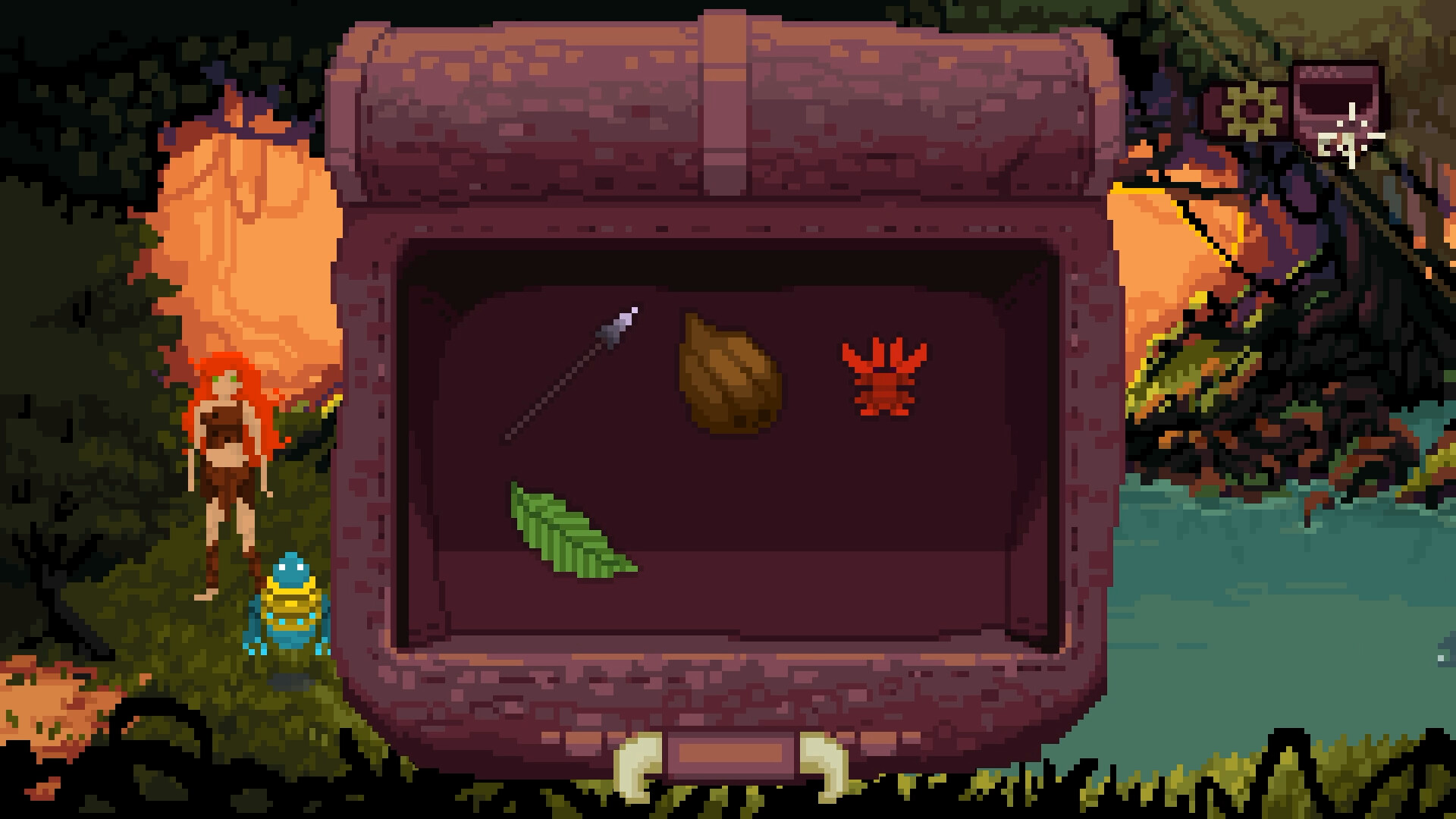
Classic adventure structure — explore scenes, gather what you need, and work out what goes where.
A dedicated button reveals every interactable spot on screen. No sweeping the mouse over scenery hoping for a cursor change.
Dinosaurs are threats, obstacles and occasionally the solution. Some encounters are timed.
Greet villagers, watch them react, and pick up the story through behaviour rather than exposition.
The Highlight Button Deserves Its Own Paragraph
It’s not a complete solution to getting stuck, mind. One player admitted resorting to clicking on nearly everything during the Triceratops sequence, and another found a single puzzle genuinely counter-intuitive. Knowing what is interactable doesn’t always tell you why.
It Began Life on Newgrounds
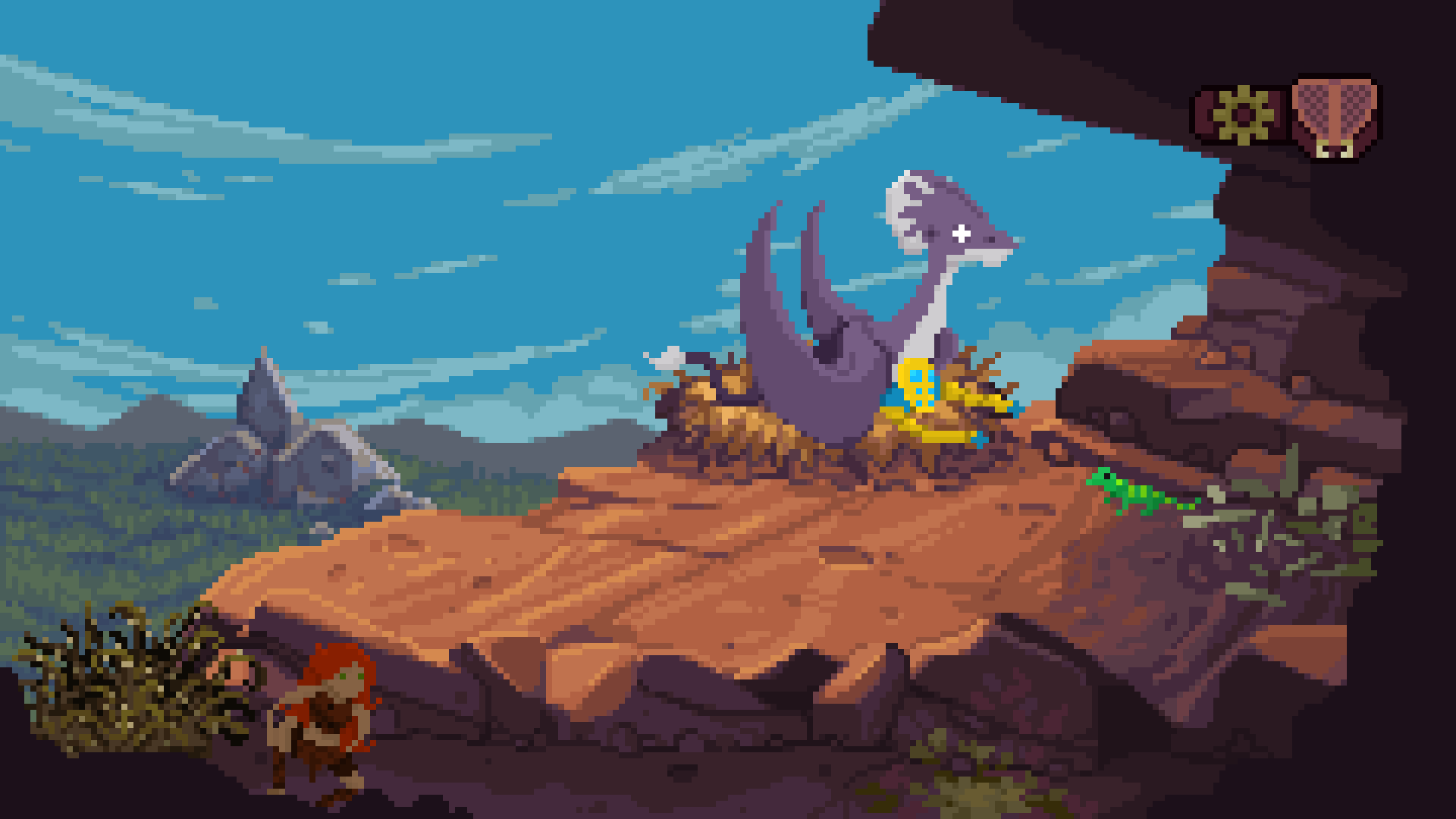
The presentation carries that heritage well. The pixel art is lush rather than austere, the soundtrack drew consistent praise, and the sound design is strong enough that players noticed when one effect was off — a coconut-eating noise in the bamboo area that struck one reviewer as too loud. When your only sound complaint is that specific, the rest is working.
Where Opinion Splits
Most players found the puzzles well-judged — neither too simple nor too difficult, treading the line between obvious and obtuse, with the pleasure of working things out unaided and no red herrings to waste your time.
One dissenting review took a considerably harder line, describing the puzzles as repetitive and clue-light enough to encourage brute-forcing, objecting to the timed sequences, and noting that some interactions need multiple clicks before anything happens. That reviewer read the whole structure as padding stretched over a two-hour game.
Both readings are recognisable from the same game. The puzzles are contained — self-enclosed problems in single areas rather than multi-step chains spanning the map — and whether that reads as elegant or thin depends largely on what you wanted from it.
The request for more quiet moments is the most interesting one. The village hide-and-seek was repeatedly praised, and it’s telling that the sequence people loved most was the one doing the least — character time rather than puzzle time. That’s a useful signal for whatever Lost Token make next.

The Good, The Bad, & The Ugly
| The Good | The Bad | The Ugly |
|---|---|---|
| Wordless Storytelling That WorksNot a line of readable text anywhere, and the story still lands dramatic and emotional beats. Expressive gibberish voices, dense background animation and strong staging carry everything. A genuine craft achievement, and what every positive review circled back to. | Puzzles Divide OpinionMost found them well-judged with no red herrings; one reviewer found them repetitive, clue-light and brute-forceable. They’re self-contained single-area problems rather than multi-step chains — elegant or thin depending on what you wanted. | The Art Style Misleads BadlyCheerful pixel art wrapped around a mother being eaten, a village massacred and a child mistreated. Not gratuitous, but genuinely upsetting — and nothing in the presentation warns you. Do not buy this for a kid because it looks sweet. |
| Pixel Hunting Is SolvedA button highlights every interactable spot on screen, removing the genre’s oldest and least defensible frustration. More adventure games should do this, and it’s slightly embarrassing that a three-person indie got there first. | Timed Sequences JarTimed puzzles sit awkwardly against an otherwise unhurried, exploratory tone, and drew specific complaint. Some interactions also need repeat clicks before anything registers. | Over in About Two HoursTwo to two-and-a-half hours, and virtually every player mentioned it. Said mostly in disappointment rather than anger — but it’s a single evening, and the price should be weighed against that. |
| Gorgeous, and Made With CareLush pixel art, glorious close-up cutscenes, a soundtrack players kept praising, and background villagers each doing their own thing. Sound design good enough that one slightly-off effect stood out as the sole complaint. | One Ending, No BranchesPlayers found a single ending and no alternative paths, and felt the premise had obvious room for both. No new game plus either. | Areas Are CompactHandsome scenes, but small ones. The most-requested change was bigger spaces and multi-area puzzle chains — which is really a request for more game. |
The Verdict
Lost Token crafts a genuinely clever adventure that uses wordless storytelling to deliver constant surprises. Three people made a point-and-click with no text in it that still manages to be dramatic, funny and occasionally quite upsetting, and that’s worth celebrating.
The craft is the draw. Animation dense enough to carry a story without dialogue, a cast with personality despite never saying anything comprehensible, a soundtrack people singled out unprompted, and a highlight button that quietly fixes the genre’s most annoying habit.
The limits are scope. Two hours, one ending, compact areas and self-contained puzzles that some found neat and others found thin. It’s a small game that knows it’s small — but a lot of people finished it wanting substantially more, which is both the best and worst thing you can say about it.
The honest read: if you like adventure games and want something beautiful for an evening, get it — ideally on sale. The wordless storytelling alone makes it worth experiencing, and there’s genuinely nothing else quite like it right now.
But take the content warning seriously. The presentation says gentle children’s story and the content very much does not, and that mismatch has caught people out.
A lovely, careful little game from three people who clearly cared. We hope they get to make a bigger one.
For more game reviews, check out our full reviews section.