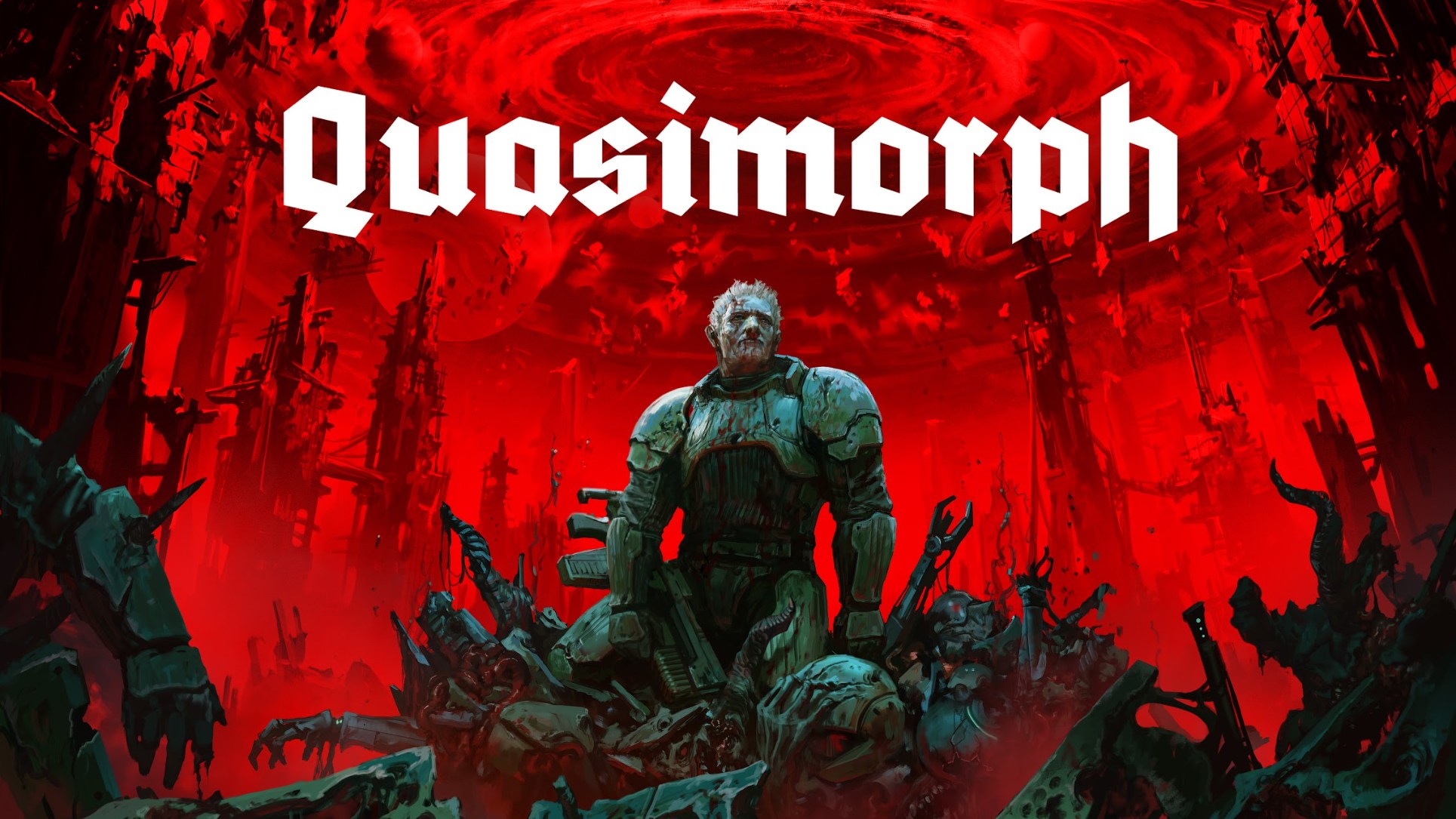
Quasimorph puts you in charge of a space PMC operating in a future where corporations own everything and something considerably worse than corporations is arriving. You take contracts, drop a printed mercenary onto a station or a wreck or a planetary base, and try to leave with more than you brought.
If you extract, you keep it all. If you die, you lose everything you were carrying — and you print another clone and go again. It left Early Access on July 31 after nearly three years, and it sits at Very Positive across almost 7,000 reviews.
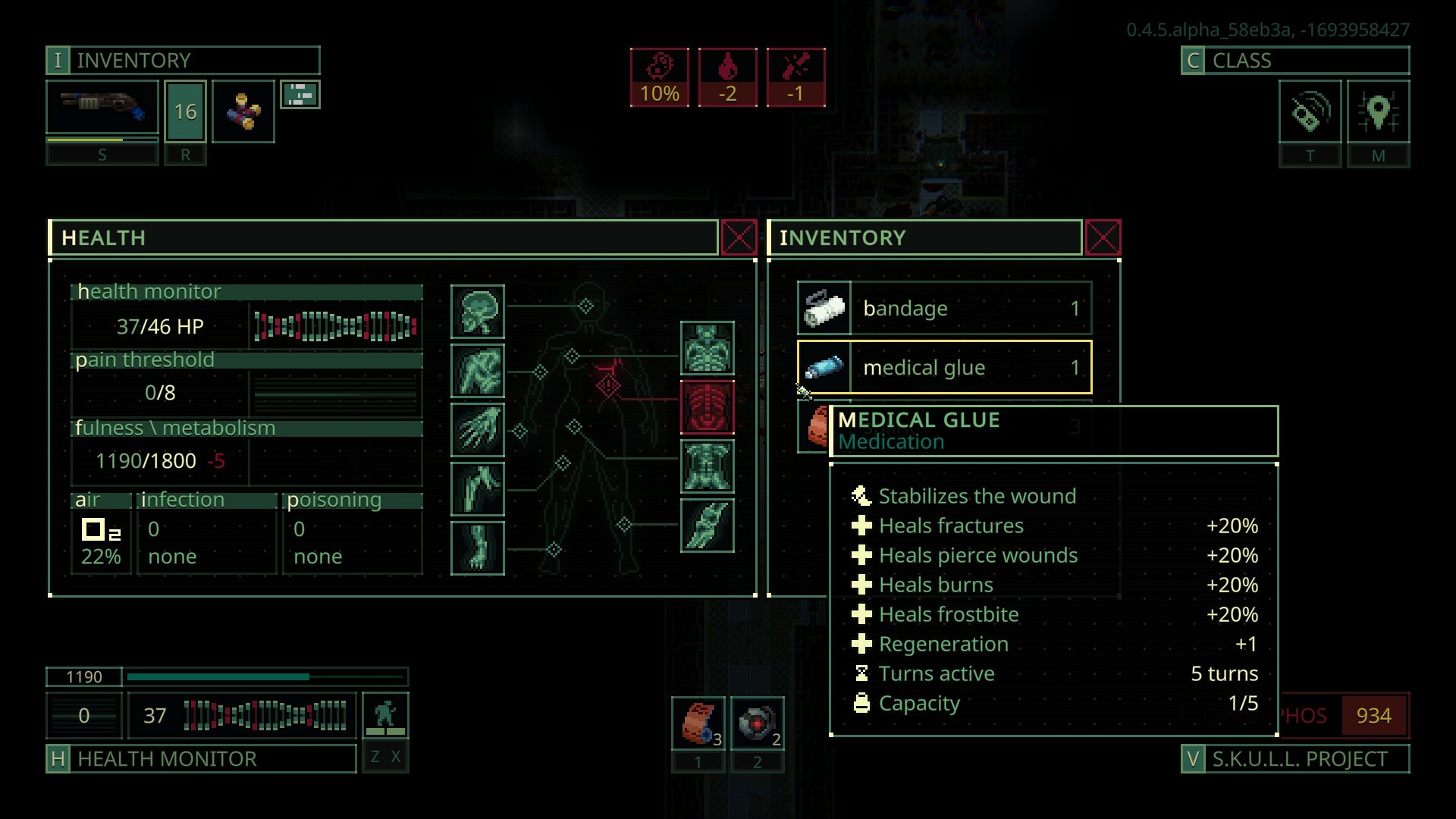
Quasimorphosis Is the Best System Here
The Tactics Get Genuinely Unhinged
There’s a Real Game Between the Runs
Plenty of roguelikes eventually flatten into repetition. Quasimorph pushes back with a meta layer that actually gives you things to chase: upgrading your flagship, recovering new technologies, hunting specific components, building reputation with corporations, and slowly turning disposable clones into augmented monsters via implants and body modification.
It’s the difference between “another run” and “another run for something,” and it’s a large part of why players report sinking dozens of hours in. HowLongToBeat currently puts the main story at around 26 hours, and 36 with extras — but this is very obviously a game where those numbers are a floor rather than a ceiling.
There are 82 achievements, hundreds of weapons and armour pieces, dozens of classes, and a genuinely deep augmentation system. Content volume is not a concern here.

The Barrier to Entry Is Real
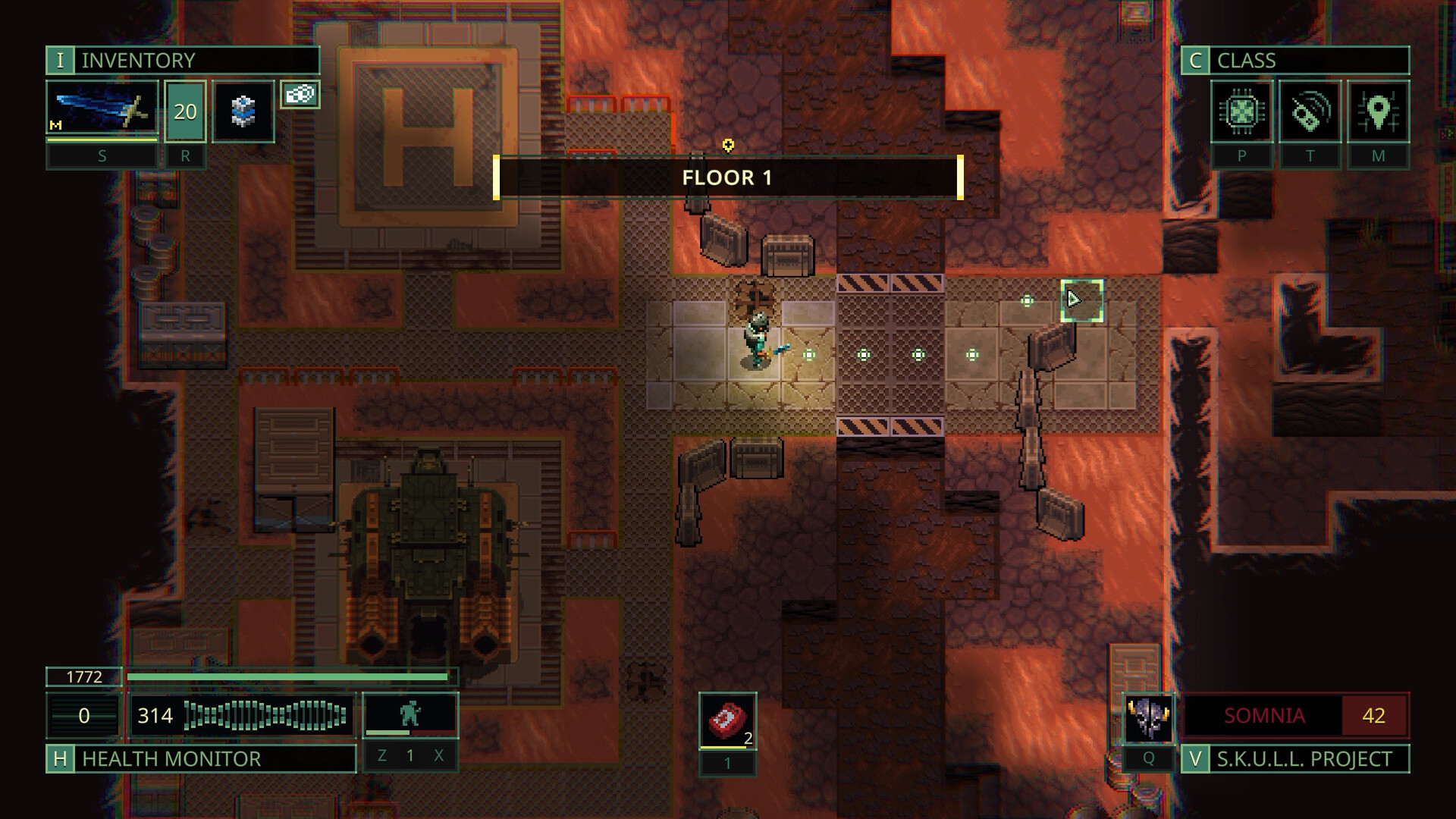
The sliders soften this considerably — being able to reduce enemy damage while you learn the systems is exactly the right escape valve, and the game explicitly encourages you to use them. But configuration isn’t the same as instruction, and a player who doesn’t know why they’re dying won’t necessarily know which slider to move.
What’s Coming Next
• Post Launch Update #1: Bestiary
• QoL and balance changes
• Major update with new mechanics
• DLC with story campaigns
A bestiary is a pointed inclusion given everything above — a game this opaque about enemy capabilities getting a formal reference is exactly the right first post-launch priority. Continued QoL and balance work through 2026, with new mechanics and story campaign DLC in 2027, suggests Magnum Scriptum aren’t treating 1.0 as the finish line.
The Good, The Bad, & The Ugly
| The Good | The Bad | The Ugly |
|---|---|---|
| Quasimorphosis Is BrilliantA soft timer you can suppress with drugs or deliberately accelerate to summon barons and farm them. Most escalation systems are pressure you endure; this one is a lever you choose to pull. Genuinely novel. | It Refuses to Teach YouPower concentration, skull ratings, faction tech, travel time, the Q meter — all load-bearing, all barely explained. Most players lose their first several clones to rules nobody told them. The community wrote the manual because the game didn’t. | Recent Reviews Have DippedVery Positive overall across ~7,000 reviews, but Mostly Positive recently. A 1.0 influx meeting the onboarding wall is a plausible read, and the devs are patching weekly — but it’s a real gap and worth knowing before you buy. |
| Difficulty Sliders for EverythingEnemy health, damage, action points, count, loot, backpack size, stack size, faction speed, crafting speed — all individually adjustable, plus Steam Workshop. Players who refunded this in 2024 have come back and stayed because of it. | Configuration Isn’t InstructionThe sliders are a superb escape valve, but a player who doesn’t understand why they’re dying won’t know which one to move. They mitigate the difficulty problem without solving the comprehension one. | It Genuinely Isn’t for EveryoneEven its most devoted players say so outright. If you want a game that respects your time, explains its systems and lets you feel competent early, this will make you miserable — sliders or not. |
| Tactics You Invent YourselfGasoline traps, revived robots paired with turrets, exploiting a demon’s lack of lightning resistance, builds nobody planned for. You feel enormously powerful and desperately fragile simultaneously, and it holds that balance for dozens of hours. | Historical Balance BaggageInventory limits, hunger rate and late-game balance were long-running complaints, and 1.0 addresses them mainly by letting you turn them off rather than reworking them. Effective, but it’s a workaround rather than a fix. | The First Few Hours Are AttritionNot the fun kind. Expect to lose clones to systems you didn’t know existed before it starts clicking — and it does click, but the wall is front-loaded and steep. |
The Verdict
This punishing turn-based cyberpunk RPG demands tactical brilliance and ruthless decision-making from start to finish — and after three years in Early Access, it has finally stopped demanding that you also tolerate its worst habits.
Quasimorph is a genuinely excellent game buried under a genuinely poor tutorial. The systems are deep, the tactical space is enormous, the meta progression gives runs a purpose most roguelikes never manage, and Quasimorphosis is one of the smartest escalation mechanics in the genre precisely because you can choose to make it worse. Nearly 7,000 players rating it Very Positive is not an accident.
The comprehensive difficulty sliders are the reason this scores where it does rather than several points lower. They take a game that was aggressively hostile to newcomers and make it something you can meet on your own terms — and the fact that people who refunded it years ago have returned and stayed is the strongest possible evidence they work.
What they don’t do is explain anything. You will still spend your first evening dying to rules the game never mentioned, and no slider fixes that. A bestiary is coming, which is the right instinct.
Buy it if you like XCOM-adjacent tactics with real consequences, you enjoyed Tarkov’s extraction tension without the reflexes, or the phrase “beat a demon to death with your own amputated arm” appeals to you on any level. Twenty-five dollars for 26-plus hours of this is a straightforward yes.
Skip it if you want to be taught rather than tested. The sliders will lower the difficulty; they won’t lower the learning curve, and this game asks you to build most of your understanding yourself.
For more reviews, check out our full reviews section.