Game: Theos: Cities of Myth (Demo)
Developer: Triskell Interactive
Publisher: Dotemu
Genre: Mythological City Builder
Demo: Free · out now
Full Release: November 4, 2026
Platform: PC (Steam)
Steam Deck: Unknown
🏛️ How we reviewed it: we played the free Theos: Cities of Myth demo on PC. This is a demo review, so treat it as early impressions rather than a final verdict on the full game. Our take also draws on the experiences of other players since the demo went live.
📜 Know this first: it’s a free demo, and it’s still being patched. The demo covers the first three chapters of the Athens campaign, and the full game launches on Steam on November 4. The developers are already updating it: one player reports that an alt-tab crash was fixed within days. Save often, though. One player lost an hour and a half of progress to a soft lock, and found there’s no autosave.
⚡ A Spiritual Successor to Zeus: Master of Olympus
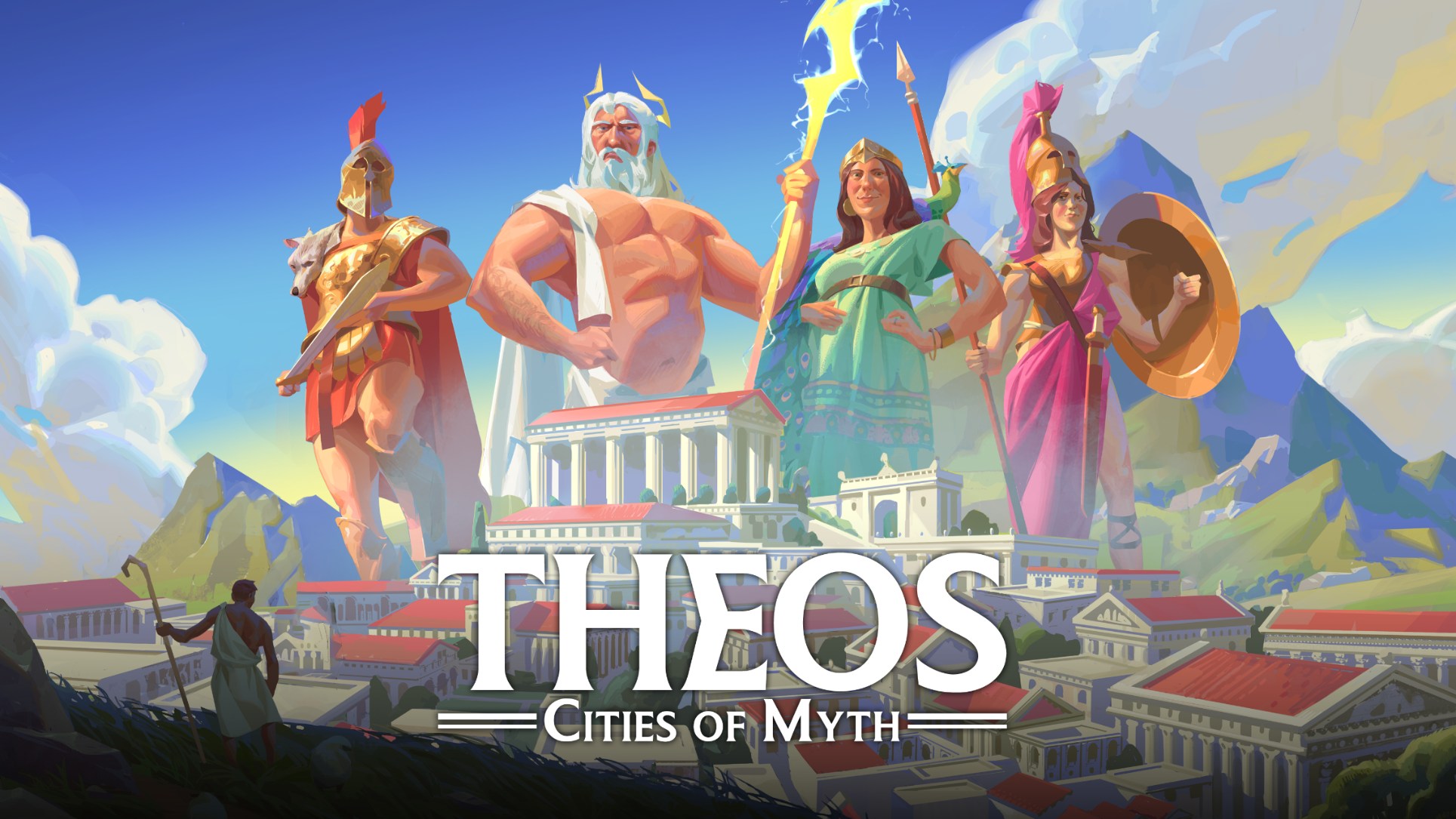
If you lost whole weekends to Zeus: Master of Olympus and its Poseidon expansion back in the day, Theos is aimed squarely at you. It’s a classic walker-style city builder in the tradition of Impressions Games, set in a reimagined Ancient Greece where history and myth walk hand in hand.
It’s made by Triskell Interactive, the team behind Pharaoh: A New Era, and published by Dotemu. And based on the demo’s Steam reviews, plenty of Zeus veterans are already putting it through its paces, with Mixed results so far.
Build a city worthy of the gods. Then save. Then save again.
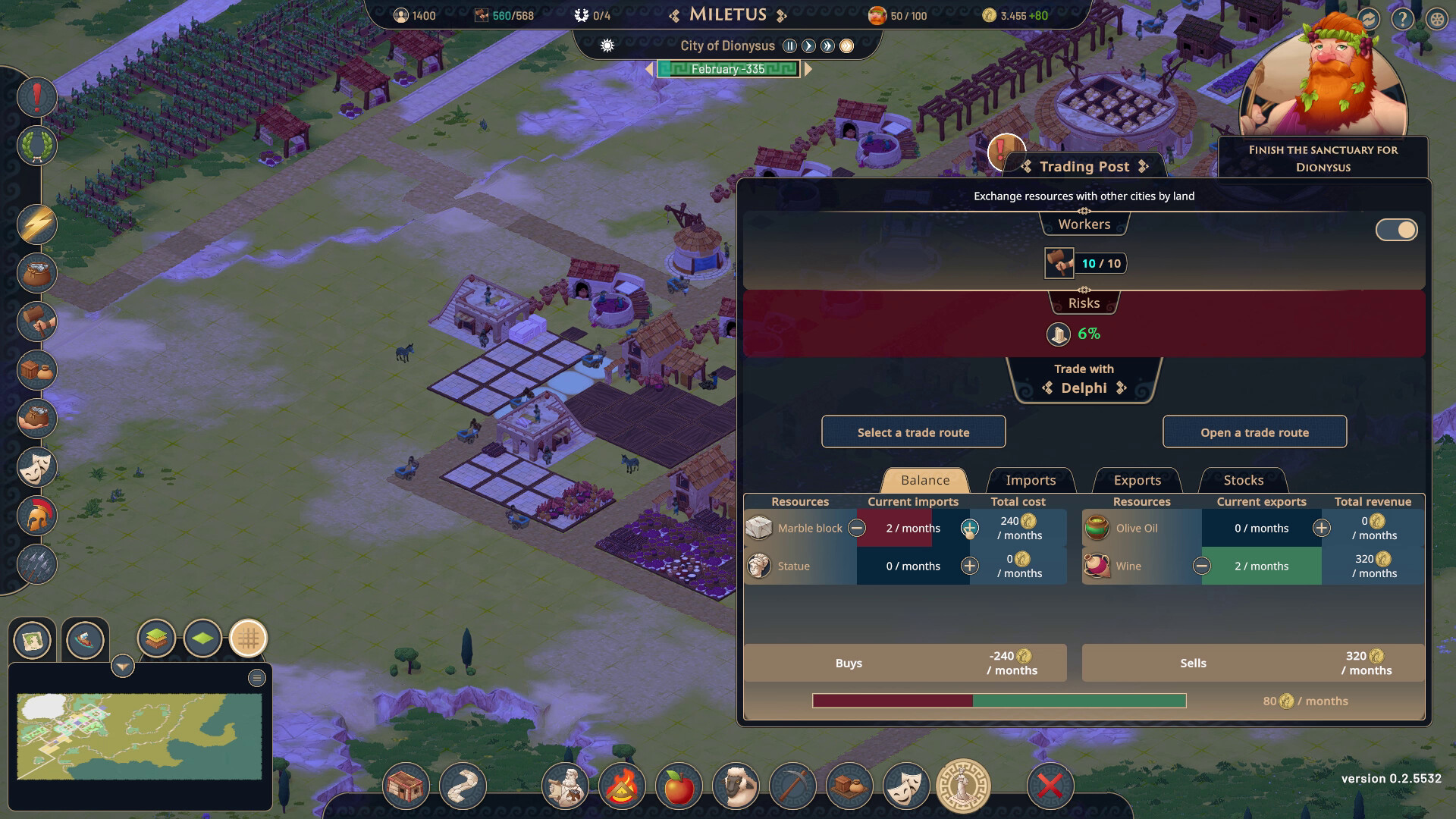
In Theos: Cities of Myth, you found a new polis and dedicate it to one of seven Greek deities. You build a Sanctuary for your patron god, lay out road networks to keep your citizens fed and safe, gather and trade resources, and raise majestic temples so your city can prosper under the gods’ watchful eye. After a tutorial, the demo puts you on the throne of Athens and then has you found the colony of Miletus, with a series of divine demands guiding each mission.
Our take on the demo: Theos delivers a refreshing spin on city-builders by letting you craft divine metropolises dedicated to Greek gods, combining strategic depth with mythological charm.
Two Patrons, Two Very Different Cities
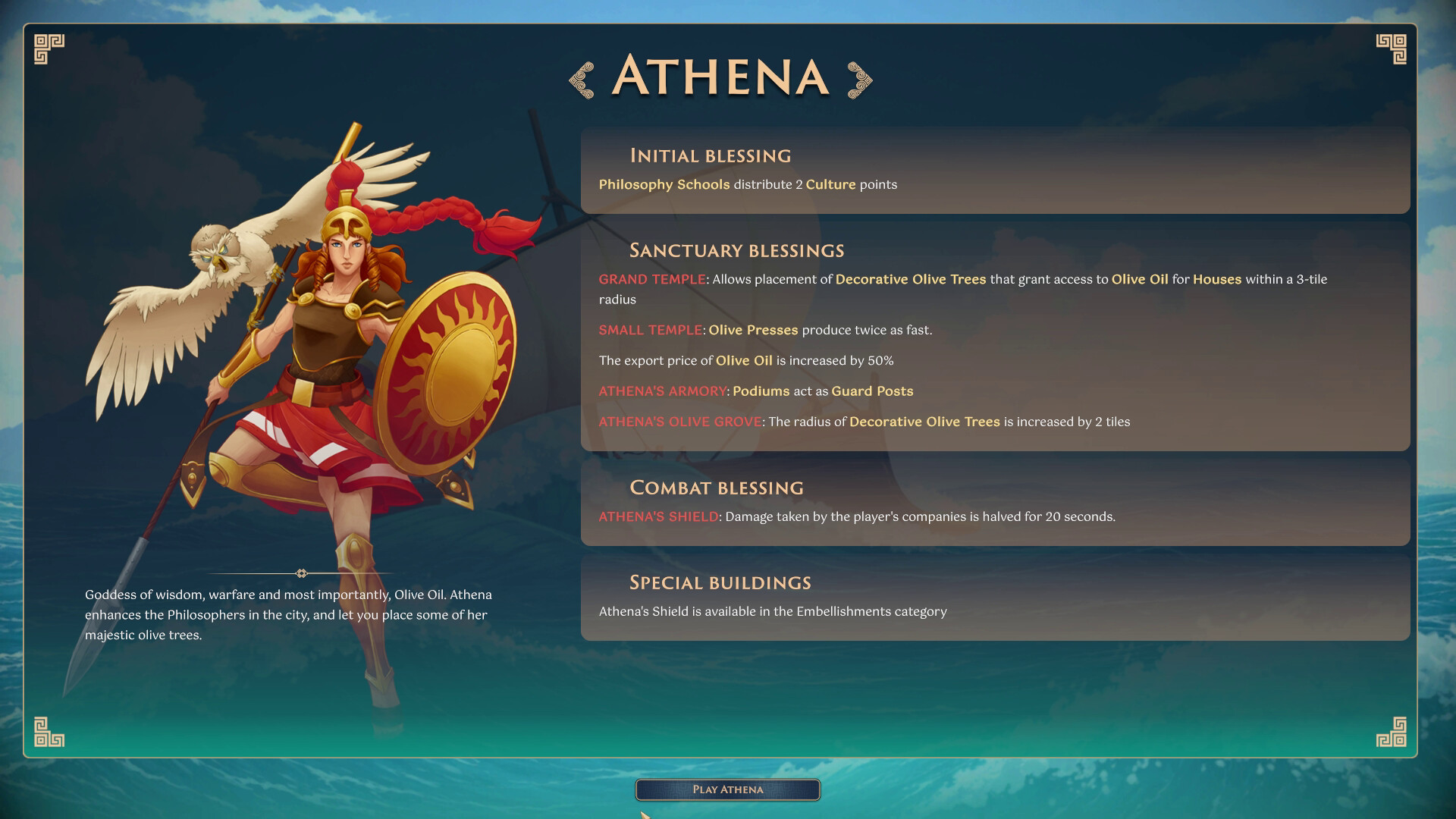
🦉 Athena · Athens
A city where philosophy schools spread knowledge
Citizens kept fed and secure through prudent alliances
Balanced trade agreements are the name of the game
🍇 Dionysus · Miletus
Athena’s half-brother, and a very different patron
A colony where the party never ends
Citizens kept happy with celebration and excess
Building around a single god from the very start is a great hook, and it gives each city a distinct personality. The full game expands the pantheon to seven patrons: Zeus, Athena, Hermes, Ares, Poseidon, Hera and Dionysus.
What’s New Since Zeus
🛡️ Planned Patrols
Set the exact routes your patrolling workers take, instead of hoping they wander the right way.
🏛️ Temples in Temples
Build your patron’s Sanctuary, then raise temples within the temple. Players love this one.
🧩 Shaped Farm Fields
Fields come in Tetris-like shapes, adding a layer of layout puzzling to your farmland.
🌙 Day/Night Cycle
A light touch of 3D and a day/night cycle bring the classic style up to date.
The standout is the patrol planning. Several players single it out as the best new idea: being able to set exactly where your patrolling workers go means you can design your city layout around their routes, rather than fighting with roaming walkers. A couple of players also love the temple-within-a-temple Sanctuaries, and one tip worth knowing: you can rotate most buildings with the R key, which helps break up the monotony of your streets.
The new farm fields are more divisive. One player enjoys the extra layer of complexity from their Tetris-like shapes, while another found it frustrating that the required field combinations aren’t explained, and spent several minutes working them out.
Where It Stumbles
⚠️ Not Quite Olympian Yet1. Crashes, a soft lock and no autosave. Several players hit crashes, and one couldn’t get past food production because of them. Another lost 90 minutes of progress to a soft lock on the loading screen for the demo’s second city, only to discover there’s no autosave. The alt-tab crash has reportedly already been patched, which is a good sign.
2. A city that feels a little sterile. Several players found the cities lacking life. There are animations and good ambient sounds, but one player says you have to zoom in a long way to see and hear them. Two players noticed animations glitching at higher game speeds, with one saying the walkers look like they’re ice-skating. One found the houses a bit bland, one Zeus veteran misses the original’s little moments of character, and another found the graphics too basic.
3. Fiddly UI and early balance. One player called the Agora (market) interface more complicated than the original’s, with fewer features, and spent a fifth of their time managing its filters. Two players found buildings collapse very early unless you place an architect or inspector straight away, and one was frustrated at having to manually trigger each stage of a wonder.
4. A repetitive tutorial. One player was annoyed at having to rebuild the village from scratch several times during the tutorial, instead of simply moving on.
♿ Accessibility
Steam lists a mouse-only option, camera comfort settings, narrated game menus, custom volume controls and save anytime, and says it’s playable without timed input. Steam Deck compatibility hasn’t been tested yet.
Things to Know
📋 Before You Play
• The demo is free on Steam now, with the tutorial and the first three chapters of the Athens campaign
• The full game launches on November 4 for PC via Steam. The price hasn’t been announced yet
• Single-player · Windows only · 9 languages (full English audio) · requires agreeing to a third-party EULA
• Light on graphics but heavier on CPU: the minimum is a Core i5-9600K / Ryzen 5 3600XT, 8 GB RAM and a GTS 450-class GPU, with an 8 GB install
• Save manually and often in the demo
The Good, The Bad, & The Ugly
The Good
The Bad
The Ugly
Planned Patrol RoutesThe best new idea, letting you design your city around your walkers.
Sterile CitiesToo few visible animations, and sound only up close.
No AutosaveOne soft lock can wipe out 90 minutes of progress.
Patron GodsA city dedicated to one deity from the start.
Fiddly Agora UIMore complicated than the original, with fewer features.
CrashesSeveral players hit them, though fixes are already landing.
Temples Within TemplesSanctuaries are a great evolution of the classic formula.
Early BalanceBuildings collapse fast without an architect.
—
Zeus NostalgiaIt really does scratch that Impressions Games itch.
Repetitive TutorialRebuilding the village from scratch more than once.
—
Responsive DevsPatches are already arriving, and it’s free to try.
—
—
The Verdict (So Far)
Theos: Cities of Myth has the bones of a worthy successor to Zeus: Master of Olympus. Dedicating each city to a patron god is a great hook, the temple-within-a-temple Sanctuaries are a smart evolution, and planned patrol routes are the kind of quality-of-life upgrade fans of the genre have wanted for years.
But the demo is clearly still rough. Crashes, no autosave, a sterile-feeling city and a fiddly market UI have left its Steam reviews Mixed, even among players who love the genre. The good news is that Triskell is already patching, and there are still a few weeks before launch.
The honest read: if you have fond memories of Zeus, Poseidon or Pharaoh, the free demo is absolutely worth your time. Just save often, and keep your expectations for the November 4 launch measured until the polish arrives.
I'm a passionate gamer and video game enthusiast. I find immense joy in creating detailed and insightful video game reviews, diving deep into different adventures anytime I can manage. But if there's one thing that truly gets my heart racing, it's the thrill of surviving zombie-infested landscapes. Join me on my gaming journey as I explore and share my thoughts on the undead-filled worlds of gaming! 🎮🧟♂️