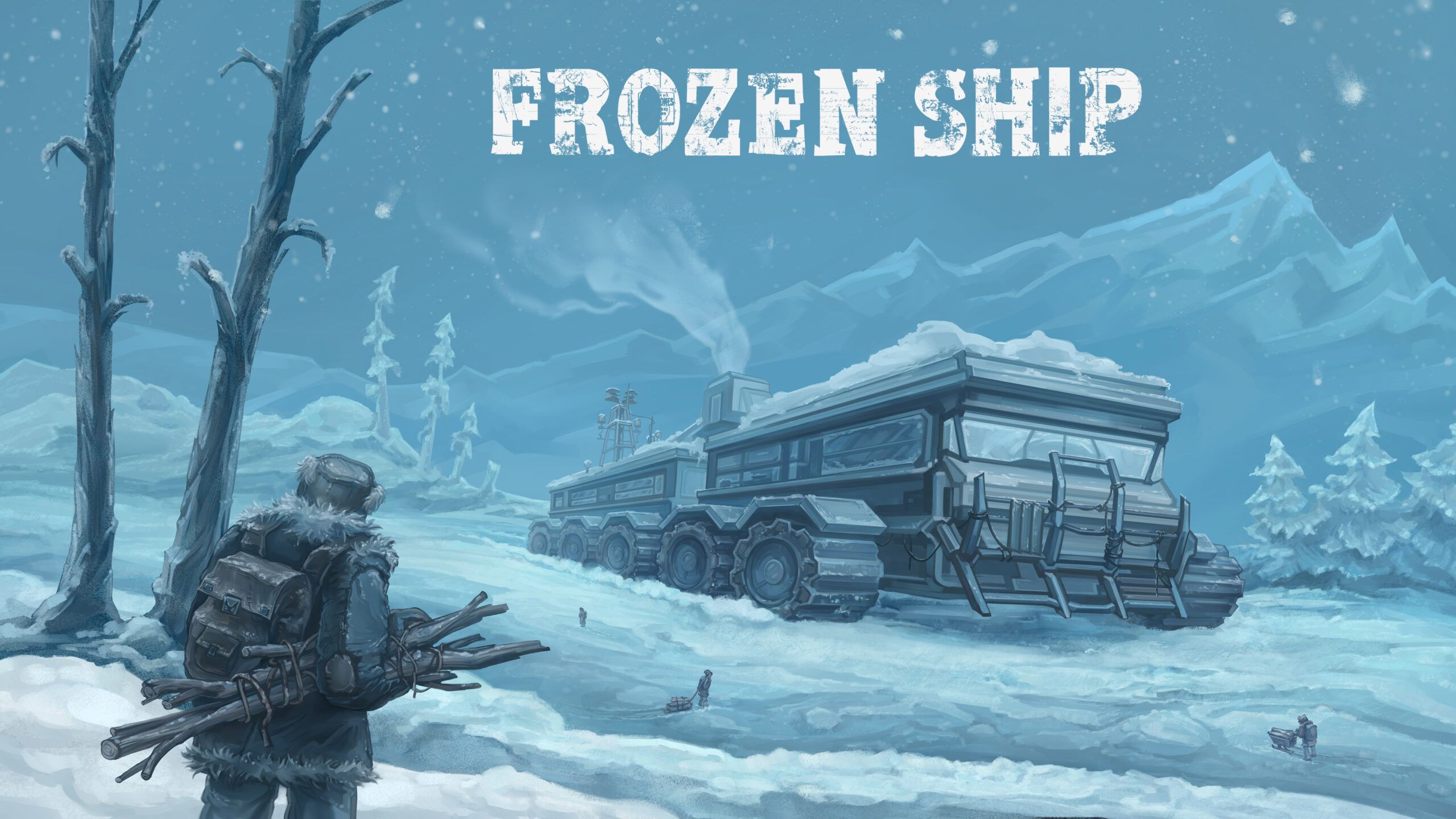
Frozen Ship opens with meteorites shifting the Earth’s orbit and ending the world in ice. Your settlement survived by huddling around a dying volcano — and now that’s failing too. So the engineers took a mine dump truck, spent years turning it into an enormous mobile city, and handed you the captain’s chair.
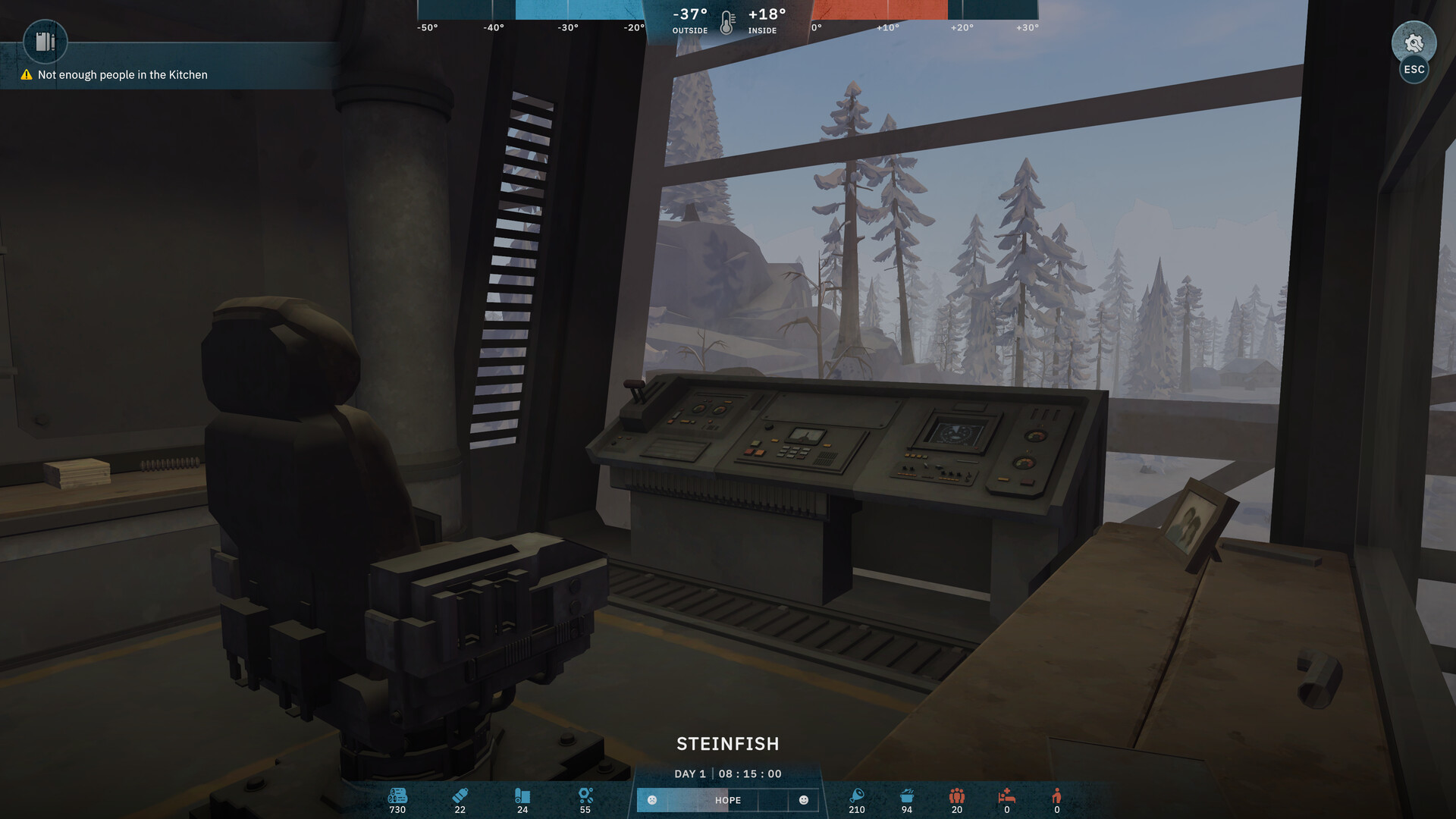
What follows is a genuinely unusual fusion. Half of Frozen Ship is a first-person survival looter where you trudge into a −37°C wasteland stripping abandoned houses for fabric and scrap. The other half is a colony management sim where you assign twenty people to kitchens, boiler rooms and gathering crews, and watch the numbers decide who eats.
Both halves feed each other, and when it clicks it’s very compelling. It’s also rough in ways that will frustrate you in the first few hours.
The Loop
Before each workday, distribute twenty people between the kitchen, wood gathering, food foraging, scrap, fabric, construction and the hospital. Everyone idle is wasted.
Leave the ship yourself and loot the wasteland — houses, cars, barrels, corpses. Everything takes in-game minutes to disassemble, so time is the real currency.
Temperatures drop to lethal at night. Miss curfew and you’re dying in the snow. Entering the ship alone costs 20 minutes of game time.
Spend the haul on a hospital, kitchen, workshop, housing and research — turning a truck into a functioning settlement, one shortage at a time.
The Fusion Genuinely Works
The management layer is more thoughtful than we expected. You’re not just balancing food and fuel; you’re watching illness, fatigue, fear and faith in the expedition. Sick crew still occupy beds and eat food while contributing nothing, so an outbreak is a compounding disaster. Building a hospital costs resources you’d rather spend on a kitchen. Everything is a trade-off against something else you also need.
The world outside supports it well. Cold is a constant, readable threat — the freezing meter fills and then your health starts going, and you learn quickly to plan routes around buildings with stoves you can light. Looting has real texture: disassembling a sofa, harvesting a rabbit carcass, pulling wiring out of a car, finding whiskey with a handwritten note telling you to leave it alone.
And the writing is better than it needs to be. The opening — watching burning fragments fall as a child, then fire and screams — sets a tone the game mostly maintains. Small character beats land, from the elderly headman quietly terrified of being hanged over a firewood shortage, to the teenage physician convinced she’s destined for something out there.
The Traders and Quests Are a Highlight
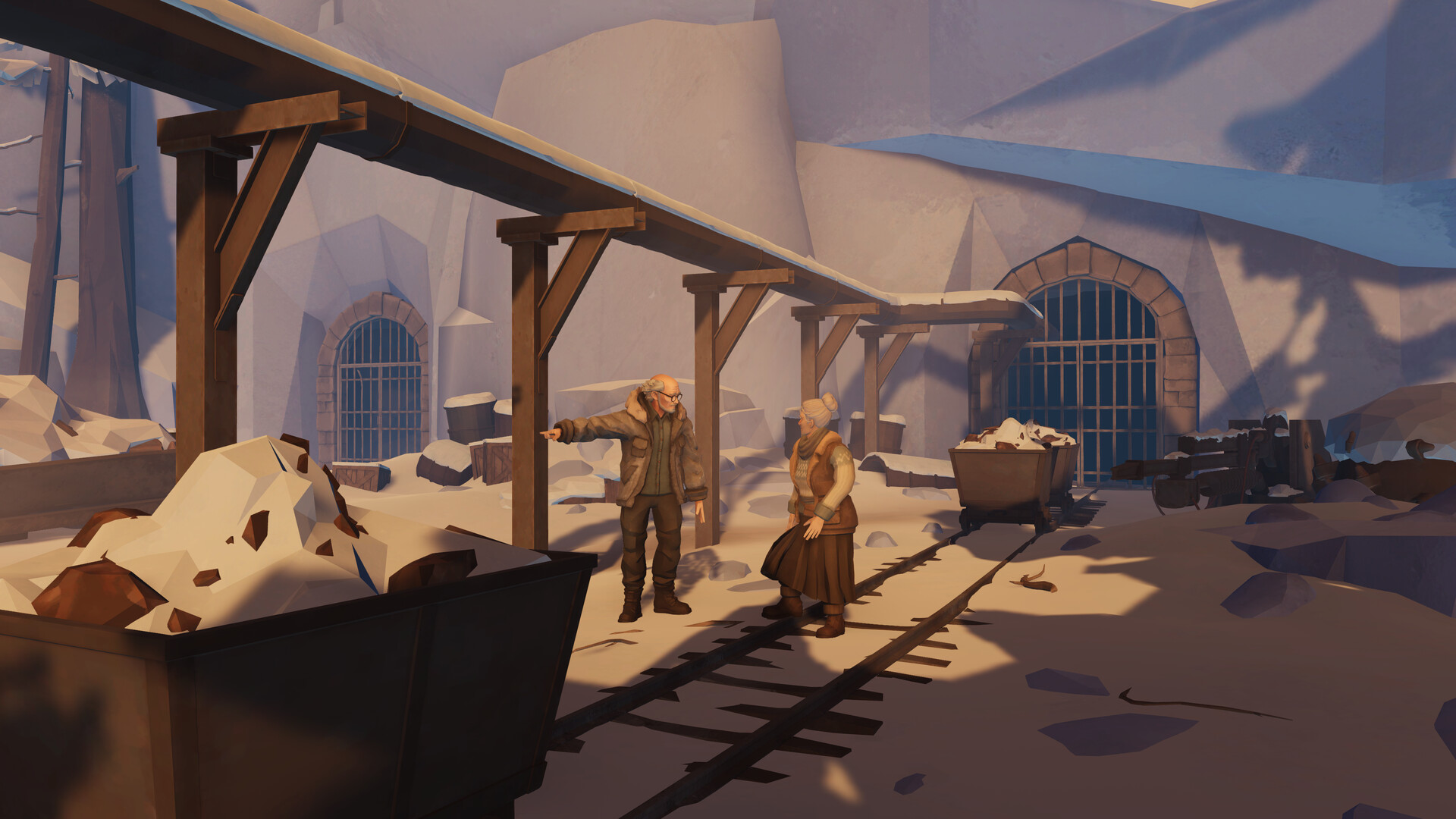
One of the best stretches of our playthrough was stumbling onto a trader — a paranoid, cagey man who immediately assumed we were there to rob him — and discovering an entire economy attached. You sell what you scavenge, buy what you can’t make, and suddenly all that junk in your backpack has a purpose.
He also handed out a side quest: replace a faulty block in an antenna up the mountain. It’s simple, but the execution was excellent — a genuine hike, a cable to follow, and three bears roaming between us and the objective while we carried no weapon at all. Sneaking past them, fixing the antenna and sprinting back before curfew was the most alive the game felt.
The ship also generates its own needs. When the lumberjack crew reported two cracked axes and one unsafe one, we had no workshop to craft replacements — so the fix was buying axes from the trader with money earned selling scavenged flashlights. Systems talking to each other like that is exactly what this genre needs.
Getting Lost Is the Biggest Problem
This is fixable and partly on the player, but the barren stretches make it worse than it should be. Large areas of the map contain genuinely nothing — we hiked what felt like kilometres and found a single car. When exploration is half your game, empty space is expensive.
Rough Edges and Friction
None of these are fatal and most are the kind of thing a year of Early Access exists to solve. The inventory and quest-tracking issues in particular feel like straightforward fixes that would meaningfully improve the first few hours.

The Good, The Bad, & The Ugly
| The Good | The Bad | The Ugly |
|---|---|---|
| A Fusion That Actually WorksSurvival looting and colony management aren’t bolted together — they’re the same problem at two scales. 600 wood a day and three meals per person create the pressure that sends you into the snow, and what you carry back decides what you build. Genuinely smart design. | A Long, Slow StartA lot of reading and setup before the game properly begins. The writing is good enough to carry it, but expect a substantial runway before the loop opens up — and some players won’t get that far. | You Will Get LostThe wasteland has almost no landmarks and the ship hides behind terrain easily. We nearly froze to death twice, once sprinting the wrong way with health draining. Take the optional compass at setup — seriously. |
| Traders, Quests and Real DangerThe trader economy gives your scavenging purpose, and the antenna side quest — a mountain hike past three roaming bears while unarmed — was the most alive the game felt. Systems genuinely talk to each other. | Inventory and UI FrictionNo “move all” button means shuffling loot piece by piece after every run. Crew counts and kitchen production maths aren’t clearly surfaced. Small things, but you hit them constantly. | Inconsistent Quest LogicA “find five houses” objective repeatedly refused to count buildings that were unmistakably houses, with no explanation given. When the game won’t tell you why an objective isn’t ticking, that’s a confidence problem. |
| Atmosphere and WritingCold is a constant, readable threat, and looting has real texture. The story lands more than it misses — burning fragments in a child’s memory, a headman afraid of the mob, a teenage doctor sure she’s meant for something out there. | Empty Stretches of MapLarge areas contain effectively nothing. One expedition covered serious ground and turned up a single car. When exploration is half the game, dead space is expensive. | Audio Balance Is OffThe ship’s engine is dramatically louder than everything else — loud enough to be genuinely uncomfortable in headphones. An easy fix, but a jarring one until it happens. |
The Verdict
A fresh genre fusion where survival meets strategy aboard a mobile settlement. Frozen Ship blends frostbitten exploration, base-building, and tough economic choices into a cold, captivating journey — and the longer we played, the more we wanted to keep going.
That’s the honest arc of our time with it. The opening hours are slow and the friction is real, but somewhere around the point where the trader economy opened up, the axe shortage forced a decision, and three bears stood between us and an antenna, it properly clicked. There’s a genuinely good game here, and the procedural world plus multiple difficulty modes and starting scenarios suggest real replay value once the rough edges come off.
But this is Early Access at the very start of a stated one-to-two year runway, and Nionetix themselves told us it isn’t in its best state yet. The navigation problem, the quest inconsistencies, the inventory friction and the empty map stretches are all things a year of development should fix — and all things you’ll be living with in the meantime.
The honest split: if you like survival management sims and you’re comfortable buying into a work in progress to support a small team, this is worth your time now. The foundations are strong, the price is lowered during Early Access, and the developers are explicitly building around community feedback.
If you want a polished, complete experience, wishlist it and check back in six months. The demo is also available if you want to test the waters first — and given the slow opening, trying before buying is a reasonable call.
A promising, genuinely distinctive game with real ideas. We’ll be watching this one closely.
For more game reviews, check out our full reviews section.
Score Breakdown