
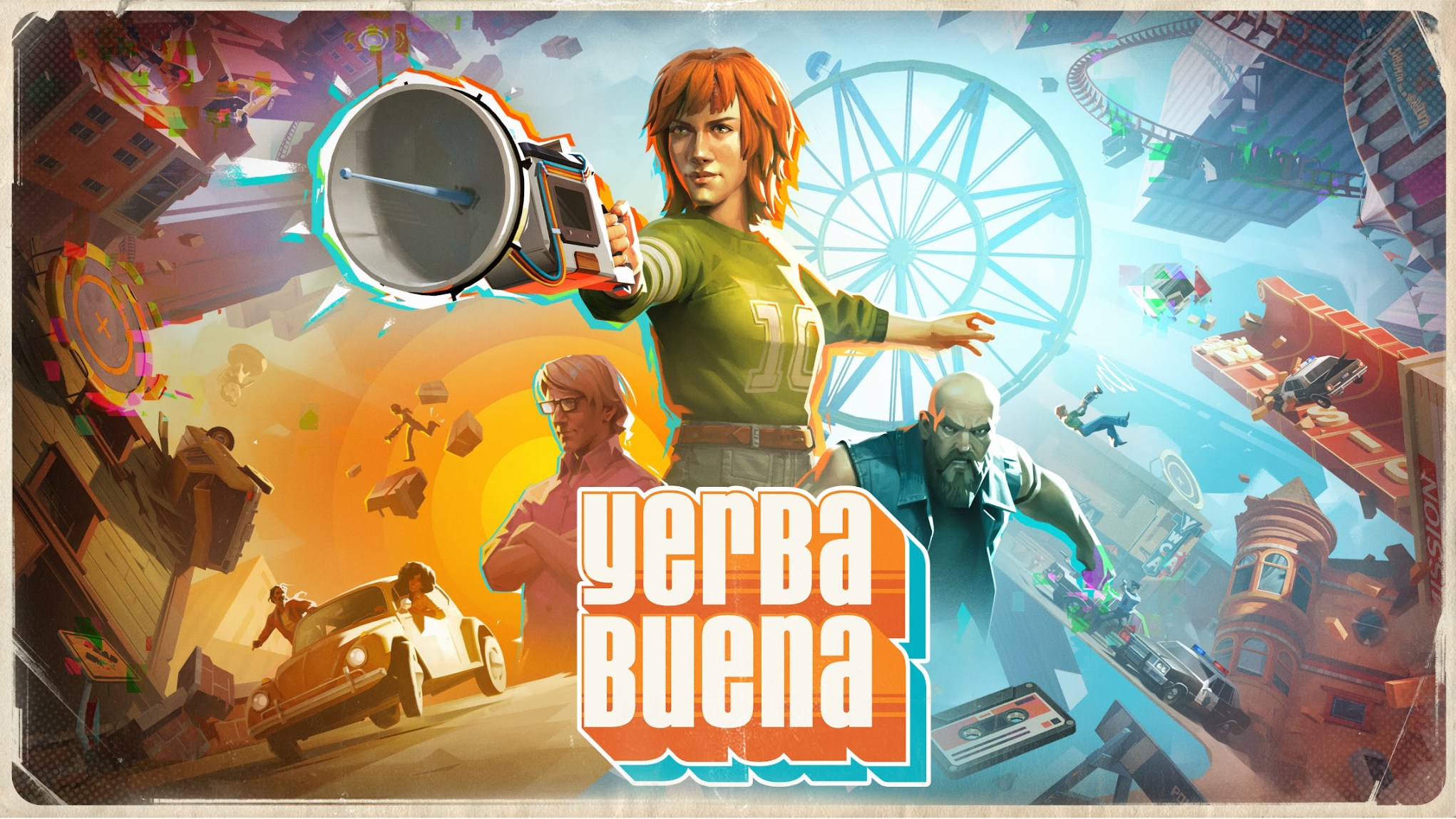
Yerba Buena is a puzzle-platformer from developer Mad About Pandas and publisher Focus Entertainment that earns its place on the shortlist of the most mechanically inventive games of 2026. Set in a surreal 1970s San Francisco where you play as Barb, an NPC who becomes the main character of a gameworld she was never supposed to lead, the game’s central mechanic — the Oscillator — lets you copy the physical properties of any object and paste them onto any other. Give a table the bounce of a trampoline. Send a building sliding across city blocks. Turn a solid wall into air. It sounds gimmicky. It isn’t. It’s one of the most genuinely fresh puzzle mechanics in recent years, and the game builds an entire world around making the most of it.
The Portal comparison players are making is apt but slightly reductive — this is Portal’s “what if you just let things be weird” cousin, running loose through a groovy 70s setting with hilariously dry dialogue and an art direction that emphatically refuses to look like anything else on the market. The meta-fictional framing — an abandoned gameworld, a character who shouldn’t exist as a protagonist, a “game within a game” concept that players say they haven’t encountered used quite like this before — gives Yerba Buena an identity that the mechanics alone would justify but the writing actively deepens.
Yerba Buena’s Oscillator: The Mechanic That Makes It Work
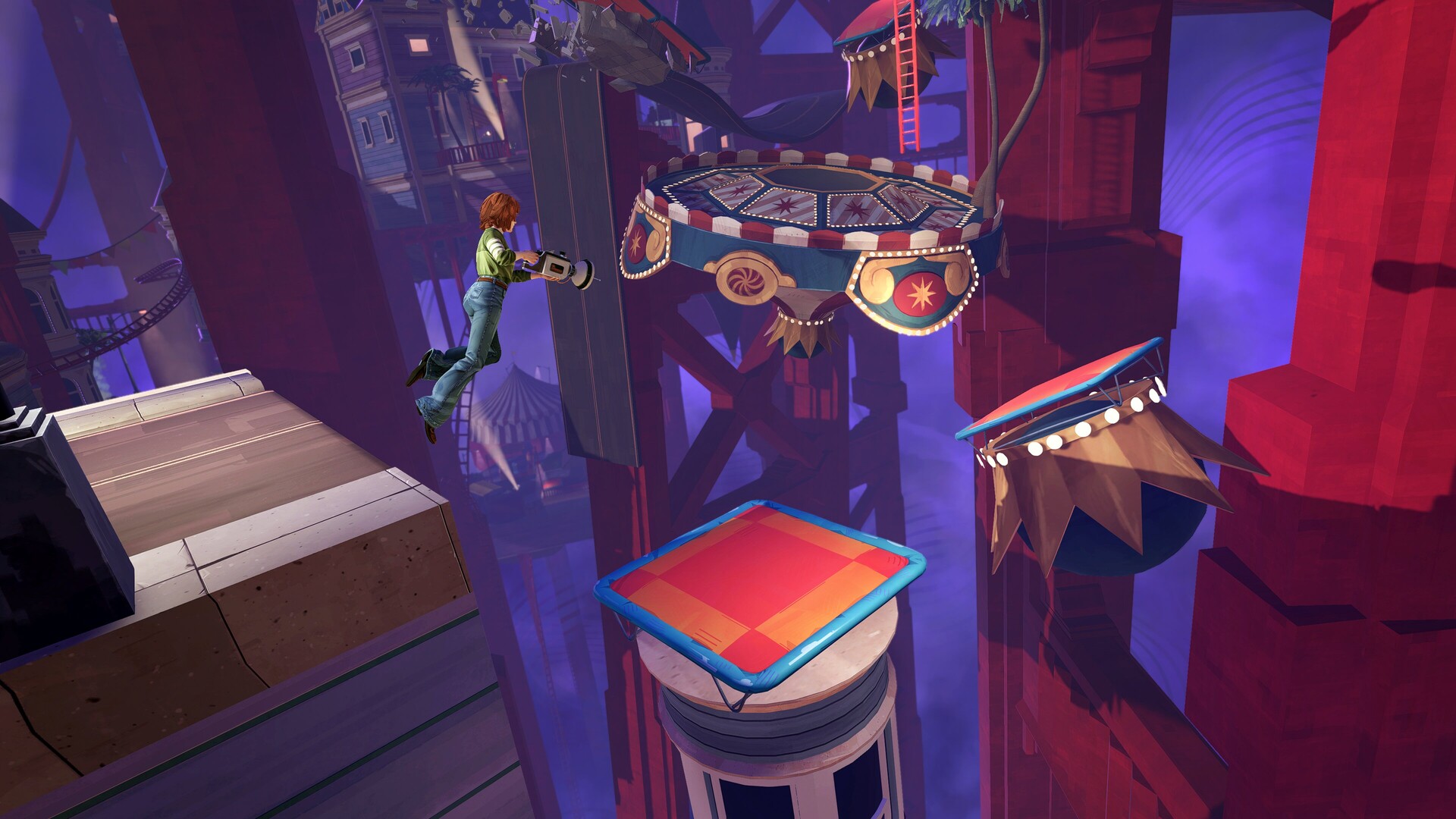
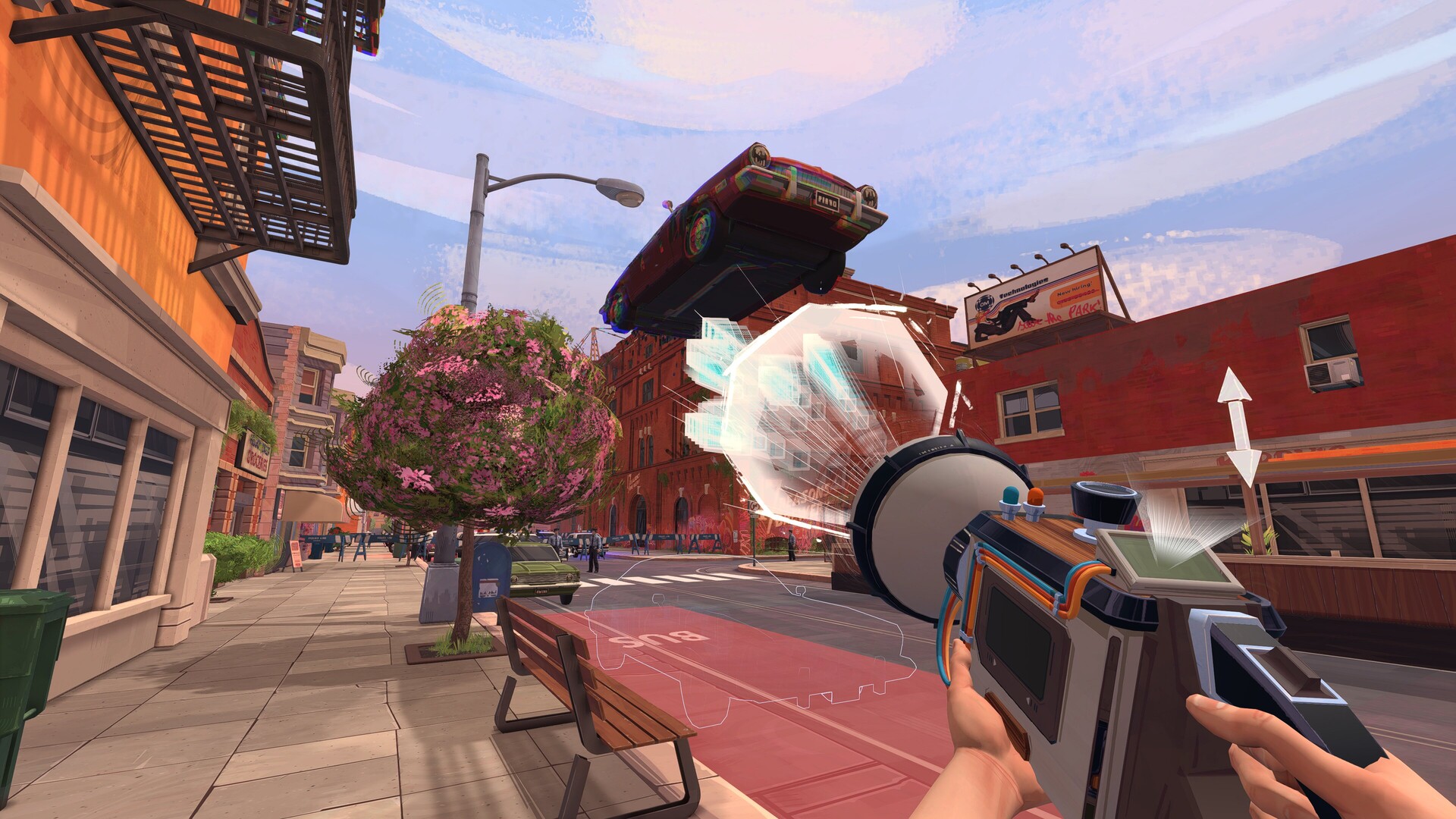
The Oscillator is the game’s reason to exist and it delivers on its premise. The “copy and paste” design applies the physical behaviour of any object to any other — so you might copy the slippery properties of ice and apply them to a wall to slide up it, or copy the weight of a heavy crate and apply it to a door to slam it open. Most puzzles have multiple valid solutions, and players consistently report finishing sections unsure whether they found the intended approach or a creative accident. The game accepts both. That feeling of “wait, did that actually work?” followed by the game cheerfully proceeding is genuinely rare in puzzle design and signals a team that understood what they were building.
The opening chapters — which overlap with the demo — showcase this at its best. Open environments with multiple objects to interact with and no clear “correct” path create genuine exploratory satisfaction. The mid-game shift toward more constrained test-chamber style puzzles has frustrated some players who found the freedom of the opener more appealing, and the difficulty curve is uneven enough that whether any given puzzle feels satisfying or arbitrary depends partly on which solution path you happen to find first.
Art Direction, Writing, and the World of Kilcairn — Wait, San Francisco
The art direction is Yerba Buena’s most immediately striking quality. There is none of what one player perfectly described as the “soulless Unreal Engine Default Asset Vibe” — the game has a proper, distinctive visual identity rooted in 70s graphic design aesthetics, with character designs that have genuine personality and environmental work that occasionally crosses into genuinely breathtaking. The “Way to Downtown” level specifically has been called one of the most visually impressive levels players have encountered in recent gaming, and it lands with the weight of a studio that cares deeply about what its world looks like.
The writing is, as players have noted, surprisingly good for the genre — dry comedy that rewards attention without demanding it, a central plot that players describe as unlike anything they’ve encountered, and a meta-fictional framing that coheres with the gameplay rather than sitting on top of it. The dialogue occasionally paces awkwardly against the action beats — the story explains itself to you a little faster than it lets you think — but the core voice is genuinely funny and distinct.
The Jank Problem and What Needs Patching
Yerba Buena launched with bugs. A soft-lock involving violently jittering moving platforms in the bunker level has prevented at least some players from completing the game — a significant problem for a 6-10 hour experience where the consequence of hitting this bug is an inability to progress. The physics system that makes the Oscillator mechanic possible also generates occasional unintended jank, which is almost inevitable given the systemic nature of what the game is doing but is noticeable enough to mention. Checkpoint placement in the final chapters has been flagged as too sparse, making repeated failures in late-game sections more punishing than the game’s tone warrants.
The animation work is the most visually rough element — character movement, particularly for secondary characters, reads as unfinished in a way that the environment quality makes more noticeable by contrast. Voice acting ranges from genuinely fitting to flat in a single session, with action sequences suffering most from delivery that doesn’t match their energy. These are the marks of a small team’s debut, not a fundamental flaw — the kind of gaps that post-launch patches and a theoretical sequel would address. The core is too strong for them to sink the game.
The Good, The Bad, & The Ugly
| The Good | The Bad | The Ugly |
|---|---|---|
| The Oscillator MechanicOne of the most genuinely innovative puzzle mechanics in years. Copy and paste physical properties between objects creates emergent solutions that make players feel clever — because they are. | Mid-Game Test Chamber ShiftThe open, free-form puzzle design of the opening narrows into constrained sequences mid-game, losing the exploratory satisfaction that makes the early chapters special. | Soft-Lock BugsThe jittering platform bug in the bunker level has left players unable to progress — a hard blocker in a game with no workaround. Needs patching urgently. |
| Singular Art DirectionA proper visual identity in a market full of Unreal Engine defaults. The 70s aesthetic is specific, detailed, and occasionally stunning — the “Way to Downtown” level alone is worth the price. | Uneven Difficulty CurvePuzzle difficulty varies without clear logic — some solutions feel solved by luck rather than skill, and it’s not always clear which you’ve done. | |
| Genuinely Funny WritingDry, meta-aware, and occasionally landing lines that players mention specifically — good comedy writing in puzzle games is rarer than it should be. | Animation and VA InconsistencyCharacter movement reads as unfinished, and voice acting ranges from fitting to flat with no reliable pattern. Action beats suffer most. | |
| Multi-Solution PuzzlesMost puzzles accept unintended solutions without judgment. The game rewards creativity alongside understanding — a design philosophy the genre needs more of. |
The Verdict
Yerba Buena is a rough gem from a team with a genuinely original vision. The Oscillator is one of the best new puzzle mechanics in recent years. The art direction is distinctive and sometimes stunning. The writing has a comedic voice that earns it. And the meta-fictional setting — an NPC becoming the protagonist of an abandoned gameworld in 1970s San Francisco — is the kind of premise that only exists once.
The launch bugs need patching, the mid-game test chambers need more openness, and the animation work needs a pass before this game is the full version of what it’s clearly trying to be. At $24.99 for 6-10 hours of something genuinely unlike anything else available, it’s a worthwhile purchase for puzzle fans who can tolerate rougher edges in exchange for genuine innovation. For more puzzle and indie game coverage, check out our full reviews section.